
In the Indian state of Kerala
Alappuzha is a Land Mark between the broad Arabian Sea and a network of rivers flowing into it. In the early first decade of the 20th Century the then Viceroy of the Indian Empire, Lord Curzon made a visit in the State to Alleppey, now Alappuzha. Fascinated by the Scenic beauty of the place, in joy and amazement, he said, “Here nature has spent up on the land her richest bounties”. In his exhilaration, it is said, he exclaimed, “Alleppey, the Venice of the East”. Thus the sobriquet found its place on the world Tourism Map. The presence of a port and a pier, criss -crossroads and numerous bridges across them, and a long and unbroken sea coast might have motivated him to make this comparison.
Alleppey has a wonderful past. Though the present town owes its existence to the sagacious Diwan Rajakesavadas in the second half of the 18th century, the district of Alappuzha figures in classified Literature. Kuttanad, the rice bowl of Kerala with the unending stretch of paddy fields, small streams, and canals with lush green coconut palms, was well known even from the early periods of the Sangam age. History says Alappuzha had trade relations with ancient Greece and Rome in B.C. and the Middle Ages.
Carved out of erstwhile Kottayam and Kollam (Quilon) districts, Alleppey district was formed on the 17th of August 1957.
The name of the district Alleppey, the anglicized form was changed to ‘Alappuzha’ as per GO(P) No.133/90/RD dated 7.2.90. It is assumed that the name Alappuzha was derived from the geographical position and physical features of the place which means “the land between the sea and the network of rivers flowing into it”.
As per GO (MS) No.1026/82/(RD) dated 29.10.1982, Pathanamthitta district was newly constituted taking portions from the then Alappuzha, Kollam, and Idukki districts. The area transferred from the erstwhile Alappuzha district to Pathanamthitta district is Thiruvalla taluk as a whole and part of Chengannur and Mavelikkara Taluks. Thus the present Alappuzha district comprises six taluks namely Cherthala, Ambalappuzha, Kuttanad, Karthikappally, Chengannur, and Mavelikkara.
Paleolithic Age
The history of the district in the Paleolithic age is obscure. It is presumed that the coastal taluks of Cherthala. Ambalappuzha and Karthikappally might have been under water and these areas were formed by the accumulation of silt and sand later than the other parts of the district. Kuttanad was well known even from the early periods of the Sangam age. The early Cheras had their home in Kuttanad and they were called ‘Kuttuvans’ named after this place. Some archeological antiques like stone inscriptions, historical monuments, etc. found in the temples, churches, rock-out caves, etc., and literacy works like.
“Unnineeli Sandesam” gives some insight into the ancient period of this district. The famous travelers Pliny and Ptolemy of the first and second centuries mentioned places like Purakkad(Barace) in their classical works. Christianity had a strong foothold in this district even from the Ist century A.D. The church located at Kokkomangalam or Kokkothamangalam was one of the seven churches founded by St.Thomas, one of the twelve disciples of Jesus Christ. It is generally believed that he landed at Maliankara in Muziris Port, presently known as Cranganore or Kodungallur in 52 A.D and preached Christianity in South India. During the 9th to 12th century AD, the district flourished in the field of religion and culture under the second Chera Empire. The famous literary work of this period was ‘Ascharya Choodamani’ a Sanskrit drama written by Sakthibhadra who was a scholar of Chengannur gramam.
16th Century
During the 16th century, small principalities like Kayamkulam (presently Karthikappally and Mavelikkara taluks), Purakkad which was often called Ambalappuzha or Chempakasseri(present Ambalappuzha and Kuttanad taluk) and Karappuram comprising of two principalities called Moothedath and Iledath (present Cherthala Taluk) emerged into power. In the same period, the Portuguese came into prominence in the political scene of the district. Christianity became popular in all parts of the district and they built several churches of which Churches located at Purakkad and Arthungal are well known. The kingdom of Chempakasseri was at its zenith during the reign of Pooradam Thirunal Devanarayana, a great scholar and a poet who was the author of ‘VedanthaRetnamala’, a commentary on the first verse of Bhagavat Geetha. It is said that the Sreekrishna Swami temple at Ambalappuzha was constructed and the idol of Lord Krishna was installed during that time. It is believed that Melpathur Narayana Bhattathiri, Sri NeelakantaDeekshithar, and Sri Kumaran Namboothiri were eminent scholars who patronized his court.
17th Century
In the 17th century, the Portuguese power declined and the Dutch had a predominant position in the principalities of this district. As a result of several treaties signed between the Dutch and the Rajas of Purakkad, Kayamkulam, and Karappuram, the Dutch built factories and warehouses in various places of the district for storing pepper, ginger, etc. Over time, they inferred the political and cultural affairs of the district. It was at that time Maharaja Marthandavarma, the ‘Maker of modern Travancore’ interfered in the political affairs of those principalities. The annexation of the Kingdoms of Kayamkulam, Ambalappuzha, Thekkumkur, Vadakkumkur, and Karappuram to Travancore gave the Dutch a setback from the political scene of the district. Marthandavarma Maharaja had a remarkable role in the internal progress of the district. He gave special attention to the development of the district as an administrative as well as a commercial center. The Krishnapuram Palace, which is now a protected monument of the State Archaeology Department, was constructed during that period. It was at that time that the great and talented poet Kunjan Nambiar was installed in the court at Trivandrum.
RAJA KESAVA DAS (1745-1799)
Raja Kesavadas, the architect of modern-day Alappuzha had a very humble beginning. He was born at Kunnathur on March 17, 1745, in the erstwhile state of Travancore as the son of a peasant woman and a police constable. His parents named the boy Kesavan. Very little is known about his early childhood. Though he lacked a formal education he exhibited a high degree of shrewdness, intelligence, honesty, and industriousness. A local merchant named Poku Moosa Marackar was so impressed by the young boy’s diligence and temperament that he employed him as a tally clerk in his firm.
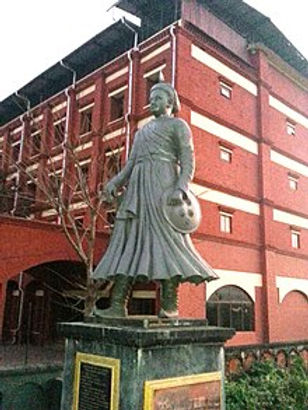
As Poku Moosa was a rich and influential merchant he made periodic visits to the royal palace. It so happened that the young Kesavan once accompanied Pokku Moosa to the royal palace. Poku Moosa was on very cordial terms with the then Maharaja of Travancore, Karthika Thirunal Rama Varma, who was affectionately called by his subjects Dharmaraja. The Maharaja was very much impressed by the intelligence and hardworking nature of Kesavan that he soon promoted him in his service and conferred on him more and more responsibilities, which Kesavan carried out most efficiently. The trust and faith that the king reposed in Kesavan were fully justified. Dharmaraja found in him a God-sent emancipator for saving the country from the prevailing troubles and turmoil. The joining together of Dharmaraja and Raja Kesavadas was an epoch-making event in the history of Venad.
Kesava Pillay had a very fast rise while in the service of the king and reached its culmination point when the king by a proclamation, made him the Valiya Divan in the year 1789. The then British Governor, Lord Mornington conferred on him the title of Raja in appreciation of his administrative talents. But out of humility he linked his name with the word Dasan and liked to be called Raja Kesava Dasan with his name at the center. He was also a well-trained soldier and led the army several times under Captain Dillanoi. After the death of Dillanoi, Raja Kesava Das became Army Chief of Travancore and was credited with victory over Tipu Sultan in the battle of Kaladi.
His greatest achievement, however, was his contribution to Making Alappuzha one of the busiest ports of the time and developing a system of inland canals for transportation and navigation. He found Alappuzha very suitable, because of geographical and oceanic reasons. Being a far-sighted statesman he knew the importance of having a port town to trade with the western countries. Raja Kesavadas was unique in having such a splendid vision, much far ahead of his time. He became very successful in materializing his dream and the first ship embarked at Alappuzha in 1786.
Raja Kesavadas made further headway in attracting businessmen from various parts of the country including those from Bombay, Gujarat, Rajasthan etc. He encouraged them to settle in the land and bestowed upon them every favor that they required for setting up their business and for building up their industrial empire.
Two parallel canals, a commercial canal and a vadaicanal with a ramifying system of waterways were built for the easy transportation of goods to the port as well as to the western countries.
Modern Alleppey
During the reign of Dharmaraja, the district was improved by all means. Raja Kesava Das, the then Diwan of Travancore who was known as the ‘Maker of modern Alleppey’ made Alappuzha a premier port town of Travancore. He constructed several roads and canals to improve communications and built warehouses. He gave all facilities to merchants and traders from far and near. During the reign of Balaramavarma Maharaja, VeluThampiDalava took a keen interest in the development of the town and port. He brought the whole area of the island Pathiramanal under coconut cultivation and large tracts under paddy cultivation. The role of VeluThampiDalava in the development of Alappuzha is worth mentioning. In the 19th century, the district attained progress in all spheres. One of the five subordinate courts opened in the state in connection with the reorganization of the judicial system by Colonel Munro was located at Mavelikkara. The credit for having the first post office and first telegraph office in the erstwhile Travancore state goes to this district. The first modern factory for the manufacture of coir mats and mattings was also established in 1859 at Alappuzha. The Town Improvement Committee was set up in 1894.
Freedom Struggle
This district had a prominent role in the freedom struggle of the country. The campaign for the eradication of untouchability was organized much earlier in this district by T.K. Madhavan, a fearless journalist and in 1925 the approach roads to the temples, especially to Ambalappuzha Sree Krishna Swami temple were thrown open to the Hindus of all castes. The district also witnessed the ‘Nivarthana’ movement which was started as a protest against the constitutional repression of 1932. the first political strike in Kerala was held at Alappuzha in 1938.
Punnapra-Vayalar
The historic struggles of Punnapra and Vayalar in 1946 stiffened the attitude of the people against Sir C.P.RamaswamyIyer, Diwan of Travancore, which ultimately led to his exit from the political scene of Travancore. After India became independent, a popular Ministry was formed in Travancore on 24th March 1948 and on Ist July 1949 Travancore and Cochin states were integrated and the position continue till the formation of Kerala State on Ist November 1956 as per the States Reorganization Act 1956. The district came into existence as a separate administrative unit on 17th August 1957.
Famous Tourist Places of Alleppy:
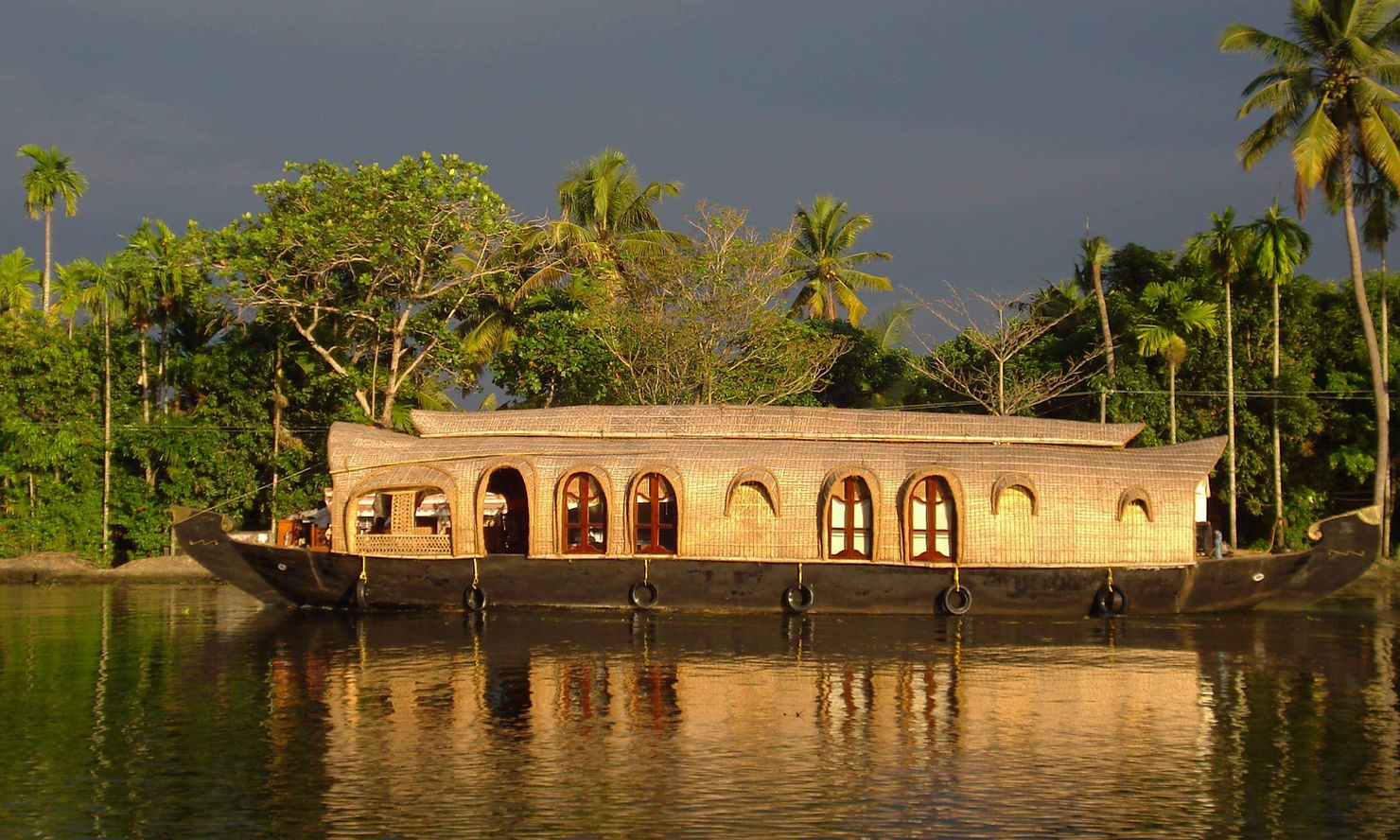
1. Kuttanad Backwaters
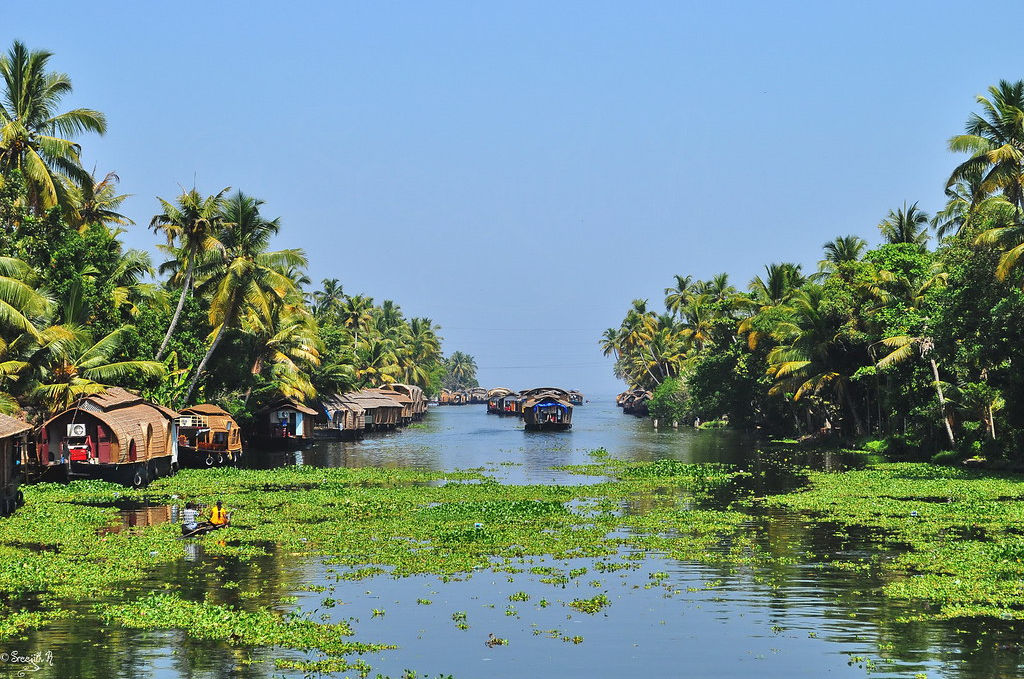
One of the best places to visit in Alleppey is Kuttanad Backwaters. This isn’t a place, it’s a phenomenon. It is a spectacular lagoon, surrounded by the beauty of lakes, rivers, canals, misty mountains, and ethereal landscapes.
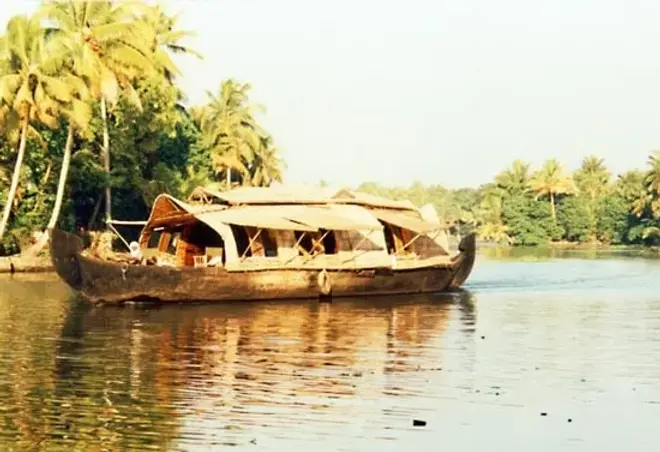
The experience of floating along the pristine backwaters on a houseboat is inexplicable. You will have to live it to know it! The place is also known as the ‘Rice bowl of Kerala,’ for its stunning rice plantations. If you are in Alleppey for a day, then this place should be your entire itinerary.
Location: Kuttanad Taluk, Alappuzha district, Kerala—688504.
Entry Fee: INR 10 for lower
INR 15 for upper decks
Timings: 10.45 AM to 9.15 PM
2. St. Mary’s Forane Church
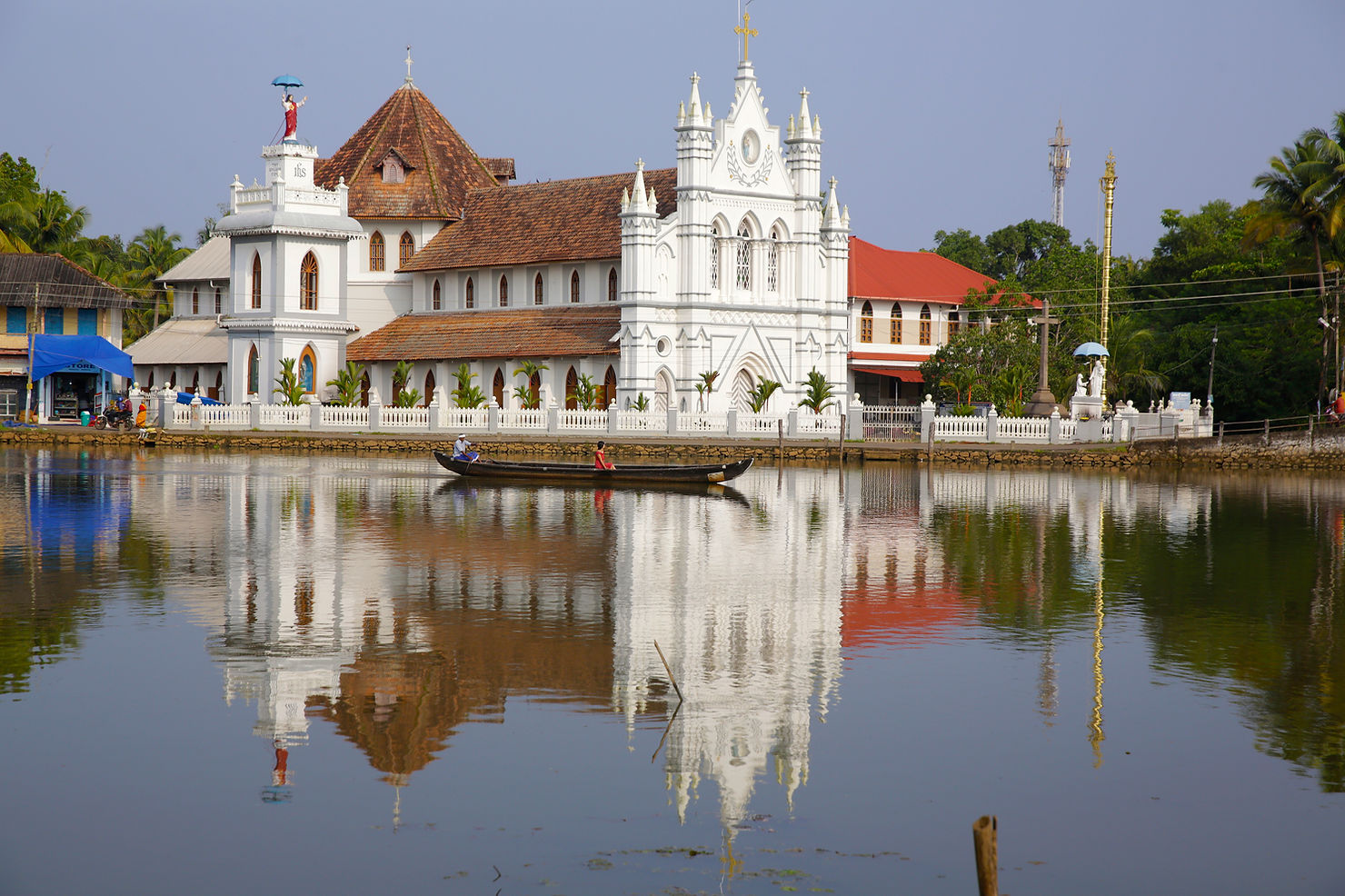
This beautiful church traces its existence back to 835 AD and is known for its events, Friday Liturgy, and educational institutions. Currently, the church is a world-renowned center of pilgrimage, where one can know more about the culture and lifestyle of the Christians.
This is one of the biggest churches and parishes of the Archeparchy of Changanassery. Currently, the church is known for housing 2500 families and is one of those Alleppey tourist places that are popularly visited by the masses. The church organizes two feasts or festivals every year. The first one of them is St. Mary’s Feast. Since the church is dedicated to the Virgin Mary, hence every year on the third Sunday of September, a feast is organized by the Church. People visit the church on this day and participate in the festival wearing special costumes for the procession and mass.
The other feast celebrated here is St. Sebastian’s Feast. Fireworks and other dazzling displays of colors make this feast remarkable, interesting, and fun. The gorgeous decorations, feast, and regal look of the church make it one of the best places to visit in Alleppey.
Location: Champakulam, Alappuzha.
Timings: 6 AM to 8 PM
Entry fee: None.
3.Krishnapuram Palace
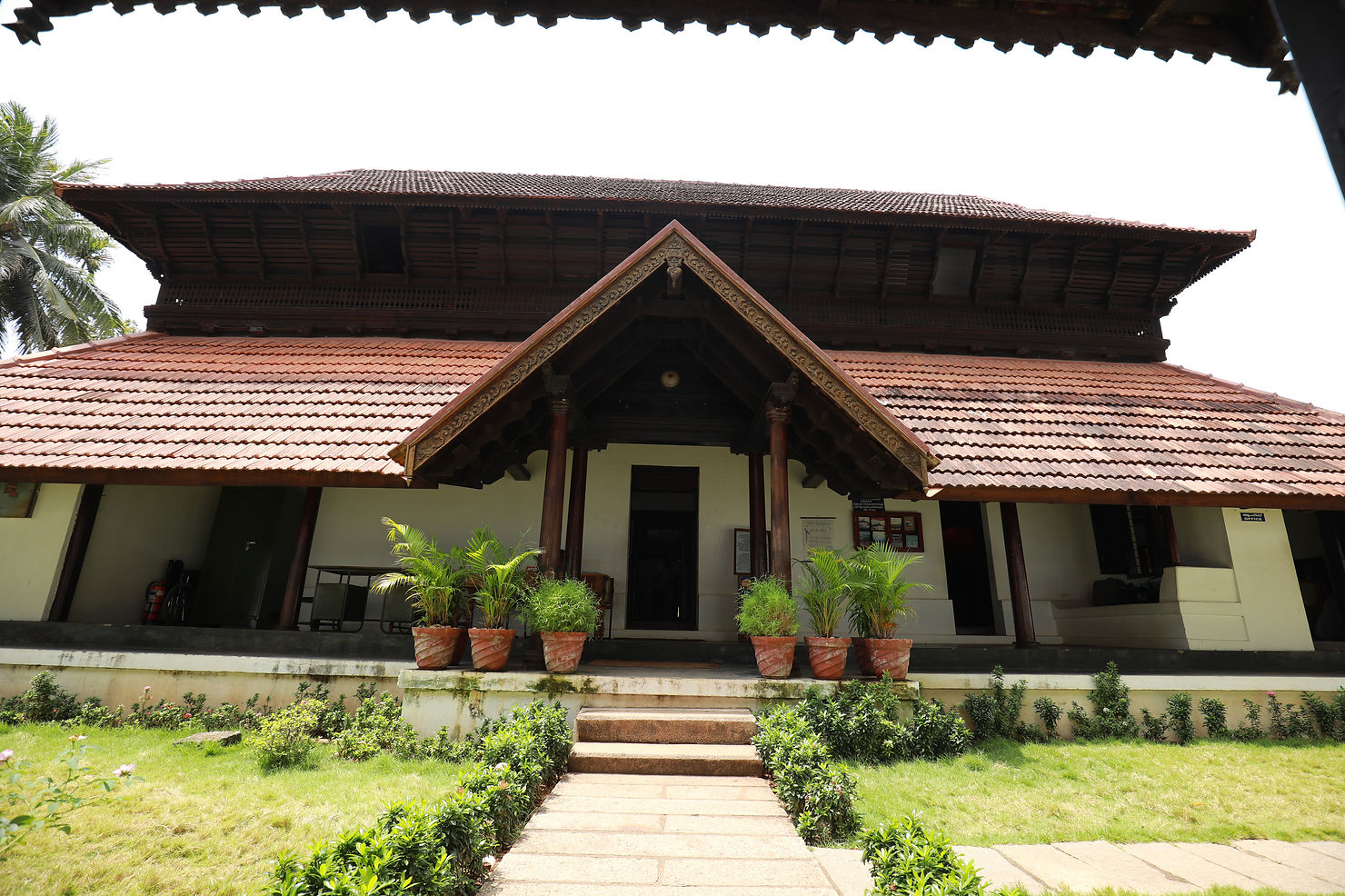
It is one of the most popular museums in Alleppey. Built-in the 18th century by the king of Travancore, Anizham Thirunal Marthanda Varma, Krishnapuram Palace is quite popular for its vintage architecture and artistic murals.
Currently maintained by the Archaeological Department of Kerala, the palace is also home to the biggest mural painting of Kerala– the ‘Gajendra Moksha.’ The enriching mural painting covers an area of about 53 km, making this palace one of the most popular places to visit in Alleppey.
Located: District Kayamkulam, Oachira Rd, Near, Krishnapuram, Kerala- 690533.
Entry Fee: INR 5 for children
INR 10 for adults
Timings: 9 AM to 1 PM
2 PM to 4.30 PM (closed on Mondays)
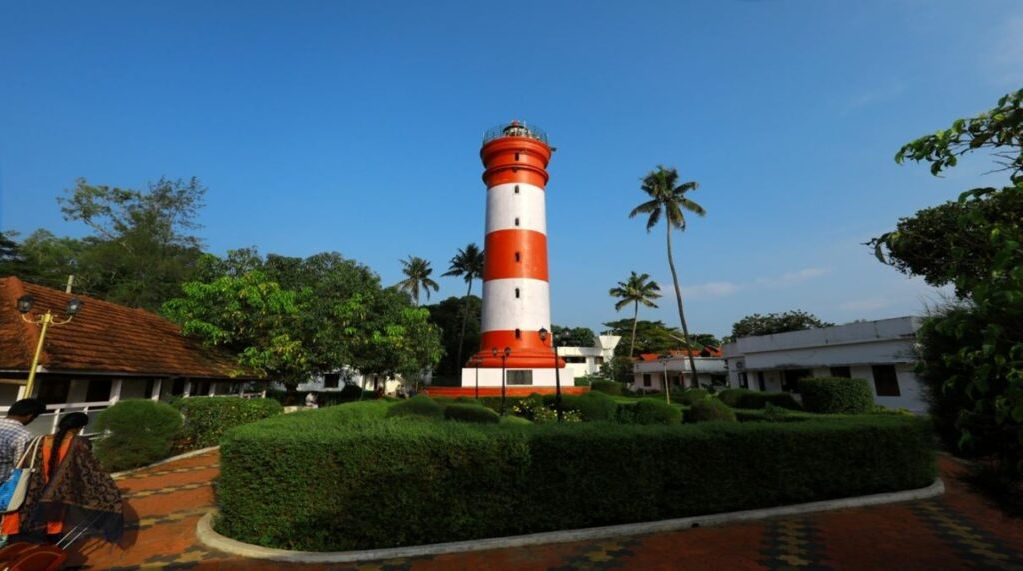
4. Alleppey Lighthouse
Famous as the Alappuzha lighthouse, the Alleppey lighthouse can be spotted from miles away. A humongous tower celebrating the solitude by the coastal strip wearing strips of red and white is how it has best reminisced.
The phenomenal tower was first installed in March 1862, almost 148 years ago. Located at around 4 kilometers ahead of Alappuzha town, Alleppey or Alappuzha lighthouse grants a panoramic 360-degree view of the ocean as well as the territorial land of Alleppey which is majorly thick and lush foliage.
Flaunting its badge of being one of the oldest lighthouses of Kerala, its construction dates back to the time when Marthanda Varma- II Maharaja owned the throne of the region.
Location: CCSB Rd, Civil Station Ward, Alappuzha, Kerala 688012
Timings: 3 PM to 5 PM
Entry fee: INR 10 for Indian adults and INR 3 for children.
5. Alleppey Beach
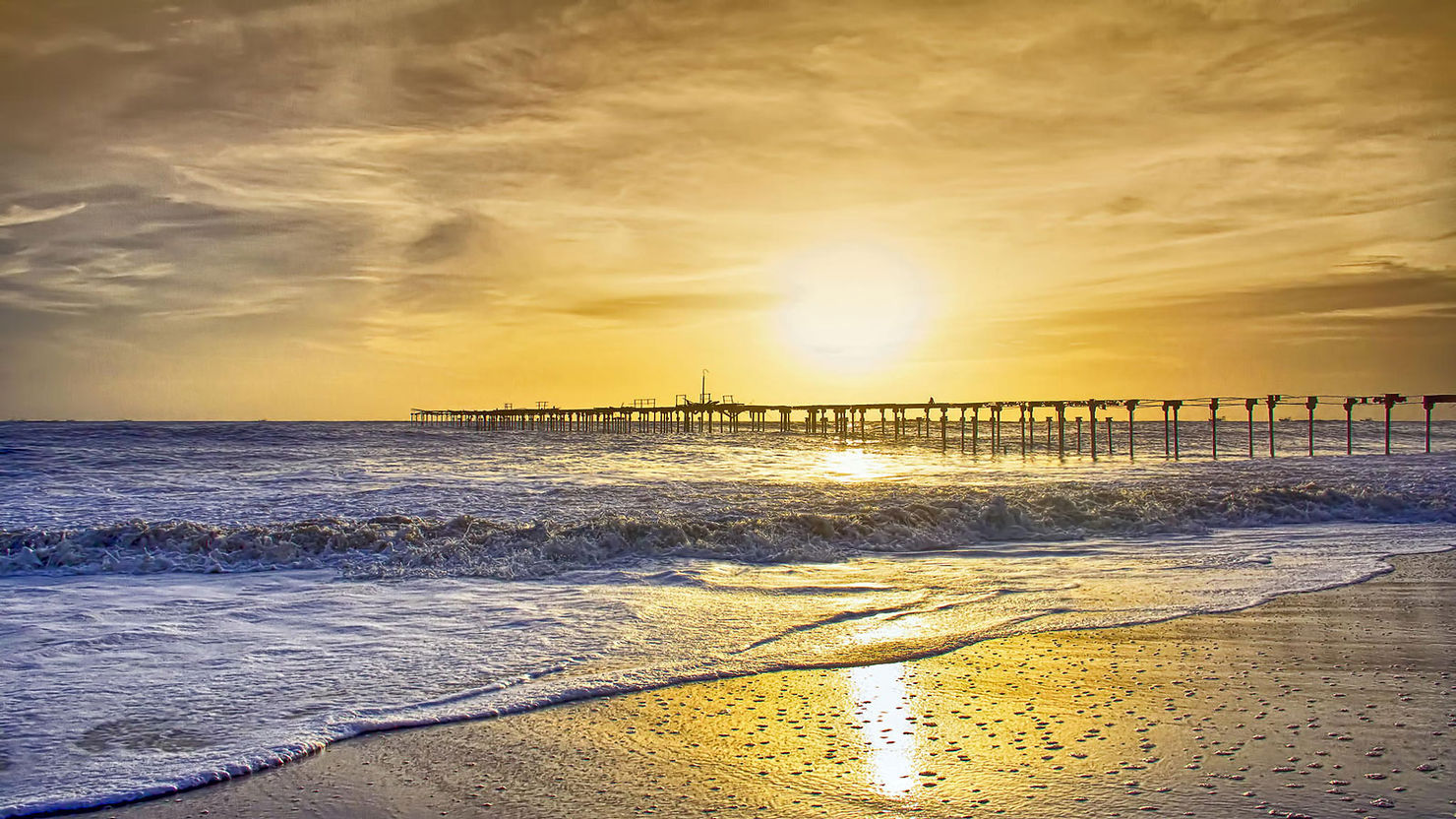
Glistening sands, crystal clear water, beautiful waves, enchanting sunrise, and sunset are what make the Alappuzha or the Alleppey beach one of the best places to visit in Alleppey. This stunningly beautiful beach is known for its vast, endless stretches, thereby proving a getaway for couples as well as families.
The remains of the Alappuzha Sea Bridge also make it one of the most popular destinations for explorers, narrating the tales of those times when Alleppey was one of the most famous and important port destinations in the state of Kerala. The beach has beautiful stretches, making the visit to this beach quite ecstatic and enjoyable.
The beach is also close to Sea View Park, which offers an opportunity to enjoy and have fun through different types of boat rides. A picnic spot is located close by, therefore families can enjoy a day off at the beach and picnic at that spot. The beach is often referred to as the ‘Venice of the East,’ because of its romantic location and popularity among European countries.
Location: Alappuzha 688007
Timings: All day.
Entry fee: None.
6.Champakulam
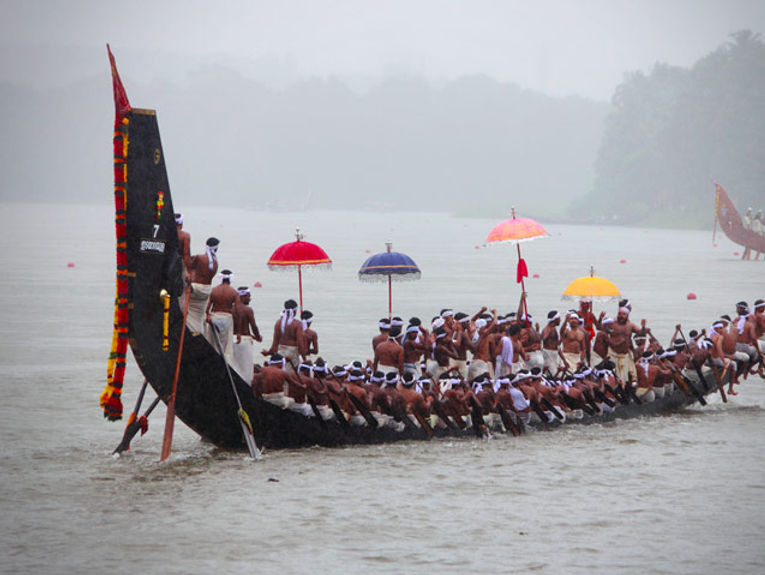
Champakulam is a captivating rural setup on the banks of Pampa River in Alappuzha district, with lush greens paddy fields, and coconut trees forming a perfect picturesque, lying amidst the rice bowl of Kerala. Champakulam Moolam Boat Race is the oldest tradition and a must to view in Kerala.
If willing to move around visit the Champakulam Church which is one of the oldest churches in India. This church has witnessed a lot of tourists in herds as well as various changes with time enhancing its heritage furthermore. Nearby this locale is a place that manufactures wooden statues of the Lord Christ and exports the same all across the globe.
Location: Champakulam, Alappuzha.
Alleppey also has:
- St. Andrew’s Basilica Arthunkal
- Karumadi
- Marari Beach
- Edathua Church
- Pandavan Rock
- Pathiramanal
- St. Andrew’s Forane Church
- Vembanad Lake
- Ambalapuzha Temple
- Mannarasala Temple
“The sun, the sea, and Alleppey – a love story for the ages.”