
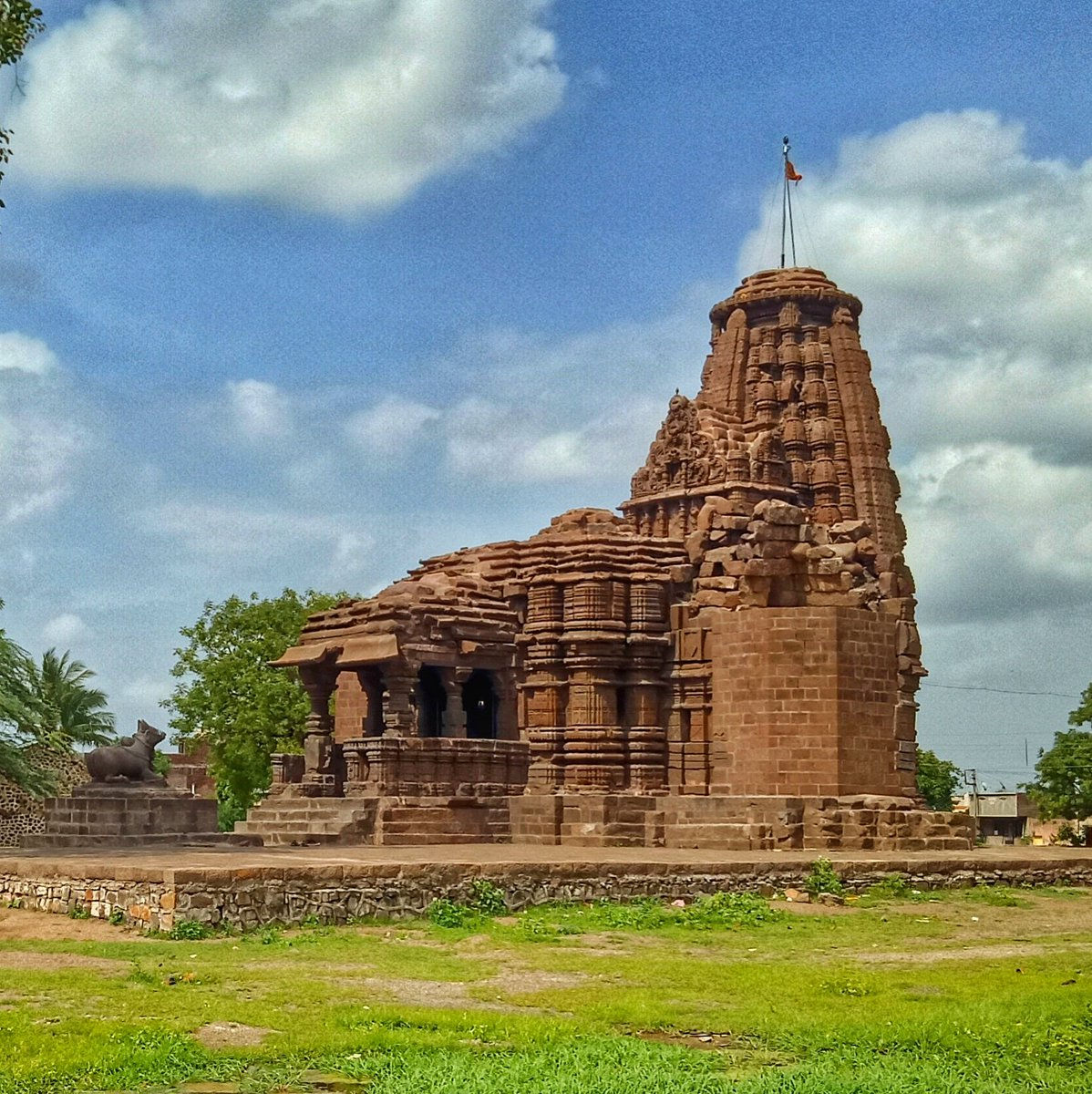
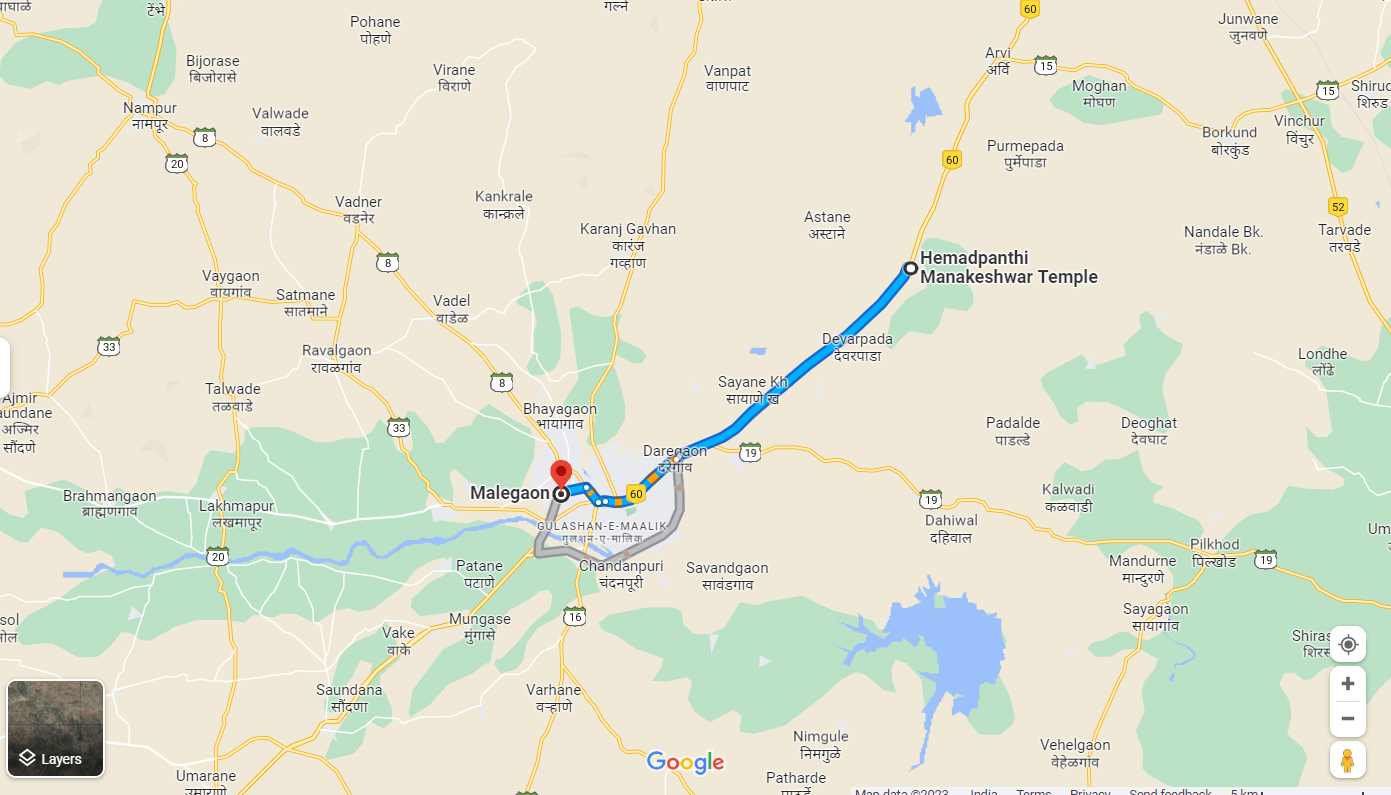
Mankeshwar temple (Marathi: माणकेश्वर मंदिर) is an ancient Shiva temple. The temple is located adjacent to the Mumbai-Agra National Highway in the village Zodage in Nashik District of Maharashtra, India. Zodage is located 128Km from Nashik.
History On Road
It is believed that the temple was built by the Yadavas or the Shilaharas under Chalukya suzerainty.
The temple covers an area of 5.57 sq mt. There is a sabhamandap with three doors and a (Garbha gruha)sanctum sanctorium. The Mankeshwar temple has carvings in Basalt rock from top to the bottom. There is a Nandi(Bull) carved in stone in front of the temple As it is a Shiva temple, many sculptures of Shiva can be seen on the temple. The temple has an open ardhamandap, leading to the mandapa, subsidiary shrines, antaral and the main garbhagriha . The roof of the Mandapa and Ardhamandapa are currently missing. There is an image of Lord Shiva in the shrine. The sculpture of Chamunda can be seen here. Ashtadikpal (the lords of the eight directions), Bhairav and Vishnu, also add to the beauty of the temple. The exterior of the temple is adorned with beauties. Musician, Darpana, Nupurpadika, Matrika, Frog (scared of frogs), Shatrumardini, Sword-wielding Maneka, Woman and scorpion, Dancer Lady, Sursundari disturbed by hoarseness The temple is adorned with beauties such as a beautician, a lady removing thorns from legs, a Kamayani, a writer, a lady spy with a snake in her hand, Lady playing conch shells and lady leaving her hair loose. The peak is characterized by a terrestrial style with a replica of small peaks, it is a typical charascteristic of Bhumij style of architecture. The face of the man in the circle at the center of the diamond head is called Kirtimukh. The temple is adorned with sixteen such Kirtimukhas. On the front side of the temple, one above the other Kirtimukh dignifies the distinctiveness of the temple. In front of the temple is another Bhumij style ruined temple.
Nashik has traditionally been considered to be the birthplace of the Yadavas of Devagiri also known as Seuna or the Gavli Kings. The Yadavas of Devagiri are known for their ingenuity and unique style of architecture called Hemadpanti named after their renowned Prime Minister, Hemadri Pandit. Temples built in Hemadpanti are seen in Rajputana, Malwa and Maharashtra.
One of the finest temples built by the Yadavas of Devagiri is the centuries-old Mankeshwar Temple in the quaint village of Zodge in Malegaon tehsil. This village is home to countless temples whose beauty and mastery is unparalleled. According to historians, the village of Zodge has a very interesting past.
Jhatumbya hill, at a little distance from Malegaon is associated with a saint named Jhoting Baba. It is said that he once saved the village while sitting astride a white horse. A temple in his honour has been built on the hill which came to be called Jhatumbhya or Jhotingya. It is likely that the village also derived its name from the hill and the saint.
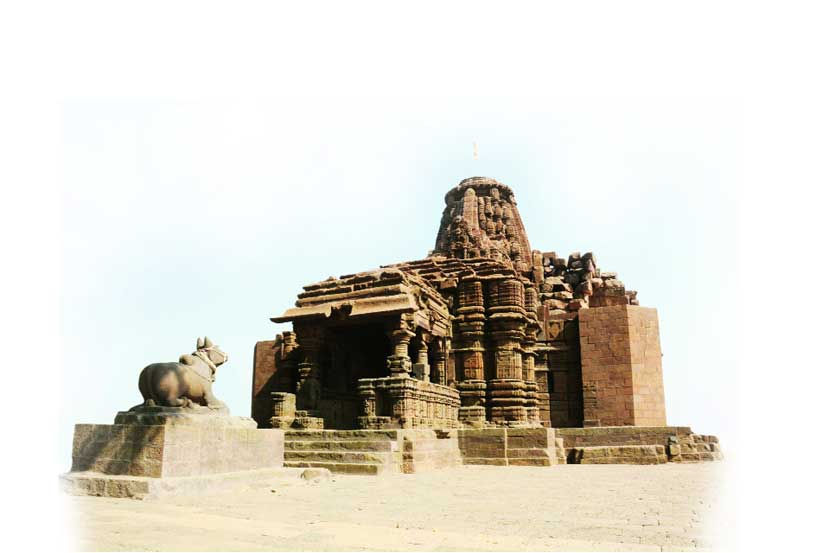
- Mankeshwar Temple is located at the base of this hill. Locals say that the village was actually on the opposite side but shifted when the plague ravaged India to where Mankeshwar Temple is located. The primordial village deity, Lord Maruti is still in his original location.
- The entire village became a fortress over the years with only one access road in the north. The fort has since collapsed but one can see a Maruti Temple at the entrance and a samadhi of a warrior. This village appears to have been immensely prosperous during the reign of the Marathas. Afzal Khan, the General of the Bijapur Adil Shahis had desecrated this temple on his way to the Konkan. One will also see a temple dedicated to Peshwa in this village. A lot of broken idols have been found in and around the village over time suggesting that this village has been raided by both Aurangzeb and Adil Shahis. There are temples dedicated to Vittala – Rukmini, Saptashrungi, Dhanimata, Janjani Mata and others in this village.
- It is widely believed that Hemadri Pandit chose this location to build Mankeshwar because the revered saint Jhoting Baba resided on the hill. Hemadri Pandit felt that the temple would be well-protected from natural elements if placed at the base of the hill.
- Stone for the temple was taken from the southern side of the hill. This temple was built in the 12th century with the village in the south and the temple facing west. It appears that the direction of yearly rains has changed after the construction of the temple.
- The sculptures on the external façade are nothing short of spectacular. Hunting scenes, dancers, apsaras like Rambha, Tilottama and Urvashi and musicians adorn the walls. There are bird baths seen inside the temple which suggests that great care was taken to ensure that their natural habitat is not disturbed at the time of construction.
- The sabha bhavan has twelve massive pilasters and the circular roof has myriad figures in dance postures. The main shrine is designed as a tridala. The Bhogamandap has two halls with richly decorated sculptures. This hall is well-lit and ventilated and can accommodate a large gathering. Interestingly, windows are seen in this hall which is a novel concept at that time.
- There is a Saraswati Temple in front of the main temple but the main idol has disappeared. The villagers are keen to preserve their glorious history and need all the help they can get to develop it into a heritage village. This temple is protected by the Archaeological Survey of India (ASI).
- The antarala has a tortoise in the ceiling and the main door of the shrine has stunning carvings of animals, yakshas, kinnaras, gandharvas and other devathas. There is an idol of Lord Ganesha at the entrance of the garbha griha. One has to descend into the sanctum sanctorum where a Shiva Linga rises slightly from the ground. The original Shakti Peetha has since been replaced.
- Both the interior and exterior of this temple is embellished and stands as a testimony to the exemplary craftsmanship and talent of the artisans. The shikhara built in Bhumija style has many intricately carved figures. There are extraordinary depictions of Lord Shiva, Chamundi Devi, Ashtadikpālas, Lord Bhairava, Lord Vishnu, singers, animal motifs, social scenes and others on the towering spire. It is very rare to see such artistry and splendour anywhere in the world.
Folklore
The temple is also closely associated with lives of Shiva.
Fair
A fair is held every year in the Hindu calendar month of Magha on 13th day.
Category: Temples Ownership: Archaeological Survey of India
I think there is no place in the world where I feel closer to the Lord than in one of His holy temples.