
Girna Dam – Dam in Maharashtra
Girna Dam, Maharashtra Girna Dam is situated in the Nashik district, which is drained by two chief rivers, the Girna and the Godavari along with their tributaries. The Girna Dam is located in the watershed of the Girna River. The Satmala range divides the catchment area of these two rivers. Several small Konkan Rivers draining westwards into the Arabian Sea also flow very close to the Girna Dam.
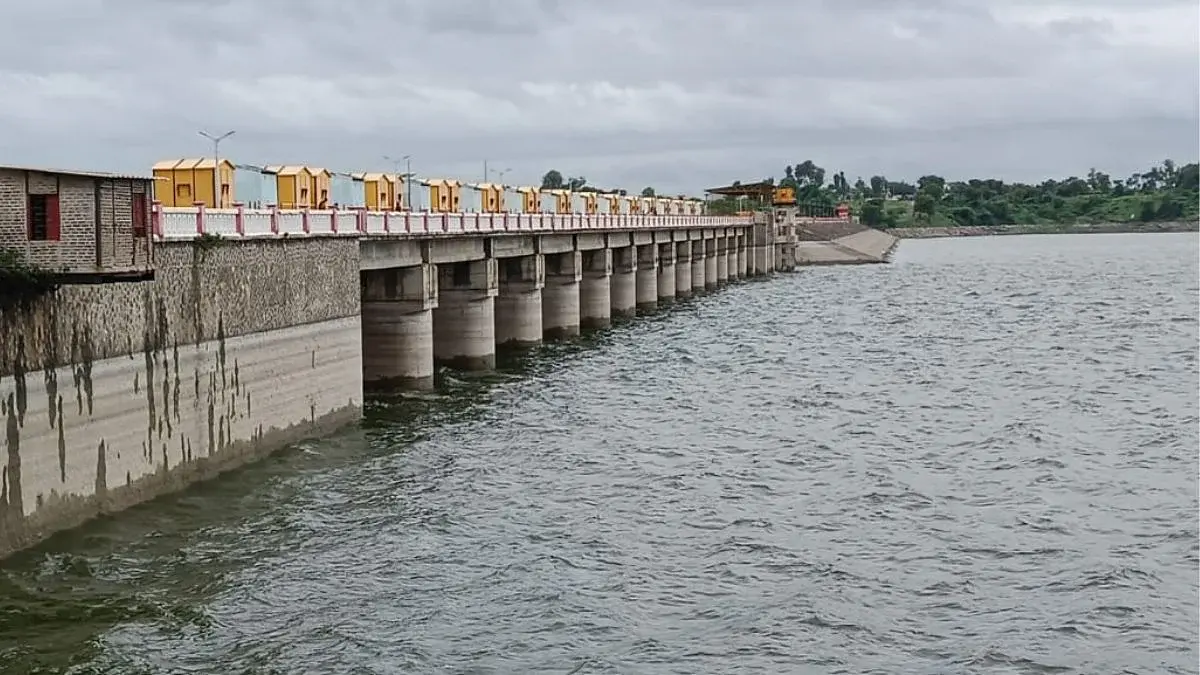
The Girna Dam is sited south of Cherai village. The river Girna flows towards the east along a wide bed and high banks in certain parts, however, low enough to admit the use of water for irrigation. The main objective to build the Girna Dam is to collect the water from the river for irrigation purposes, especially in the rainy season.
Maharashtra Girna Dam
Located in Nandgaon in the Nasik district of Maharashtra state of India, Girna Dam had been inaugurated in the year 1969 and since then it has been playing a pivotal role in the region’s progress by enhancing the growth prospects. In the earth-fall category, this dam cum spillway is 54.56 m or 179.0 ft., height with 963.17 m or 3,160.0 ft., length and a total volume comprising of 2,042 km3 or 490 cu mi it creates wonders for fast signs of progress in the entire region.
Occupying a total surface area of 60,040 km2 or 23,180 sq mi, Girna Dam has now become one of the huge projects on the Girna River of this state that is on the path to progress today. The total capacity is 525,920 km3 or 126,170 cu mi and it makes it a truly powerful one in all respects.
History
The historic importance of the earth-fill dam, Girna Dam is worth noting in today’s context. The project was started on the Girna River near Nandgaon in the Nashik district of Indian Maharashtra state nearly five decades ago with the aim to fulfill multifaceted needs for the overall prosperity and progress of the region as well as a country. With its 54.56 m or 179.0 ft., height from the lowest foundation and 963.17 m or the 3,160.0 ft., length this dam maintains 2,042 km3 or 490 cu mi volume content with an additional feature of 608,980.00 km3 or 146,102.07 cu mi gross storage capacity that makes it an amazing one in all respects.
It was an important project for which the government of India had taken initiative for the plan to maintain it systematically to ensure the everlasting growth prospects continue in the whole region besides making it a point to offer the benefits to nearby areas as well. The creation of Girna Dam post country’s independence, therefore, proved fruitful and of course, became the giant leap for the country’s prosperity.
Effect of the project
Irrigation and hydroelectricity are two major needs for which Girna Dam had been created as one of the largest dams in the country for the purpose to generate power and make the best use of it for agriculture and irrigation activities. This dam has left a bigger impact on the state in particular and the country in general by offering the best avenue to generate and supply power to this state and nearby regions as well. Its impact is equally observed through the unique effect it has given to the other sectors as well especially helping out the agricultural developments in the entire region.
Power generation
Power generation remains one of the most crucial motives behind the Girna Dam project since it was incepted on the Girna River. As an earth-fill dam on this famous river, this dam caters to the power needs of the region and equally proves helpful for the state for the adequate power supply it requires to run the state’s households and infrastructure.
Attractions
The huge structure of Girna Dam under the Girna Dam project is an important attraction in the region and it also stands ahead in the state for being a location worth noting. Nasik district also has ample tourist attractions but equally does this dam catches the attention of people arriving here for research and to have the firsthand experience of adventure.
‘”To the lost man, to the pioneer penetrating a new country, to the naturalist who wishes to see the wild land at its wildest, the advice is always the same – follow a river. The river is the original forest highway. It is nature’s own Wilderness Road.'” – Edwin Way Teale.