

सह्याद्रीच्या रांगांपासून थोडा अलिप्त राहून
आभाळाशी स्पर्धा करणारा,
चहू बाजूचे पंख पसरवून जणू
गरुडाप्रमाणे झेप घेत असावा असा वाटणारा,
कड्या कपारी एवढ्या तीक्ष्ण जणू भाल्यांची टोक..
स्वतःच्या बुलंदित राहून शत्रूला धाक बसवणारा..
तख्तासी जागा तो हाच,
म्हणून शिवरायांच्या मनात वसलेला..
।। श्रीमान रायगड ।।
Raigad Fort has Its significance in the Maratha Empire, with a rich history
Raigad is a hill fort located in Mahad, Raigad district of Maharashtra, India. It is one of the strongest fortresses on the Deccan Plateau. It was previously known as Rairee or Rairy fort.
Several structures and edifices on Raigad were built by Chhatrapati Shivaji Maharaj and the Chief Engineer was Hiroji Indulkar. When Chhatrapati Shivaji Maharaj made it his capital in 1674 upon being crowned the king of the Maratha Kingdom, which later developed into the Maratha Empire, eventually covering much of western and central India.
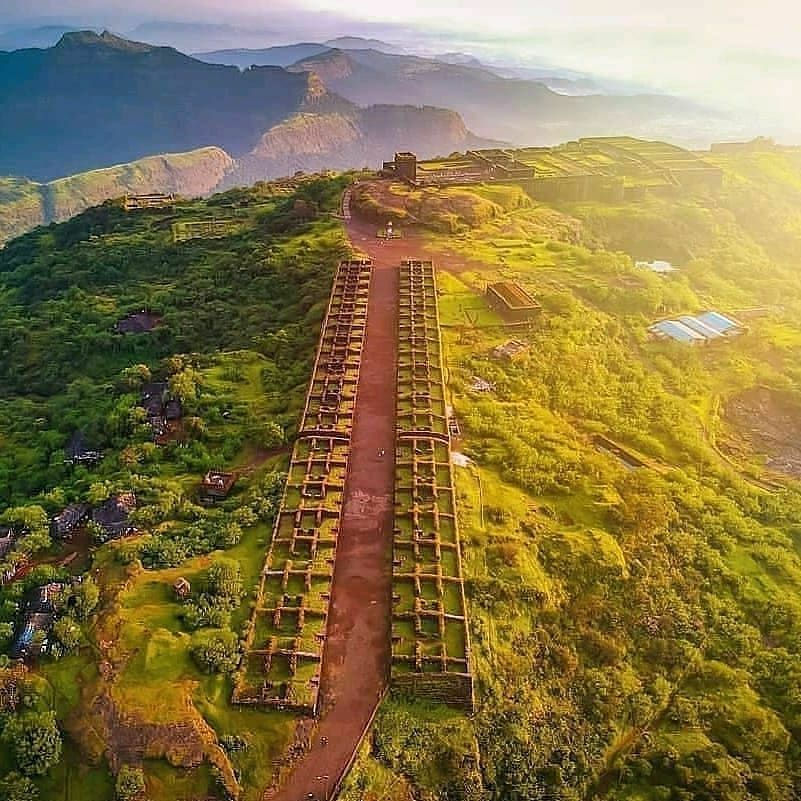
Chhatrapati Shivaji is the most revered icon in Maharashtra and there is a constant attempt by political parties of all hues to appropriate his legacy. Due to the significance of Raigad in his life, many political leaders make it a point to visit the fort.
Raigad Fort is one of the strongest-ever fortresses of the Deccan Plateau and is known as the ‘Gibraltar of the East across the world.
The fort was the location for an armed campaign executed by the British East India Company in 1765. On May 9, 1818, the fort was looted and subsequently destroyed by the British force
The main palace was built using wood, of which only the base columns remain. The main fort ruins consist of the queen’s quarters, and six chambers, with each chamber having its private restroom. The chambers do not have any windows.
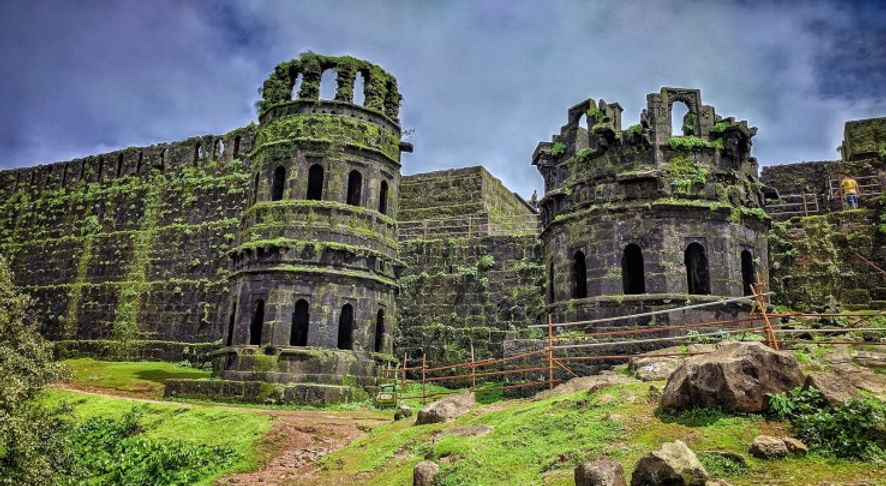
In addition, ruins of three watch towers can be seen directly in front of the palace grounds out of which only two remain as the third one was destroyed
during a bombardment.
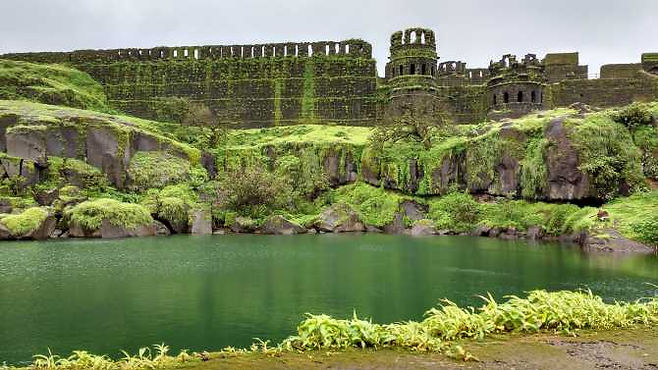
The Raigad Fort also has ruins of a market that was accessible to horseback riders. The fort also overlooks an artificial lake is known as the Ganga Sagar Lake.
The only main pathway to the fort passes through the “Maha Darwaja” (Huge Door) which was previously closed at sunset. The Maha Darwaja has two huge bastions on both sides of the door which are approximately 65–70 feet in tallness. The top of the fort is
600 ft above this door.
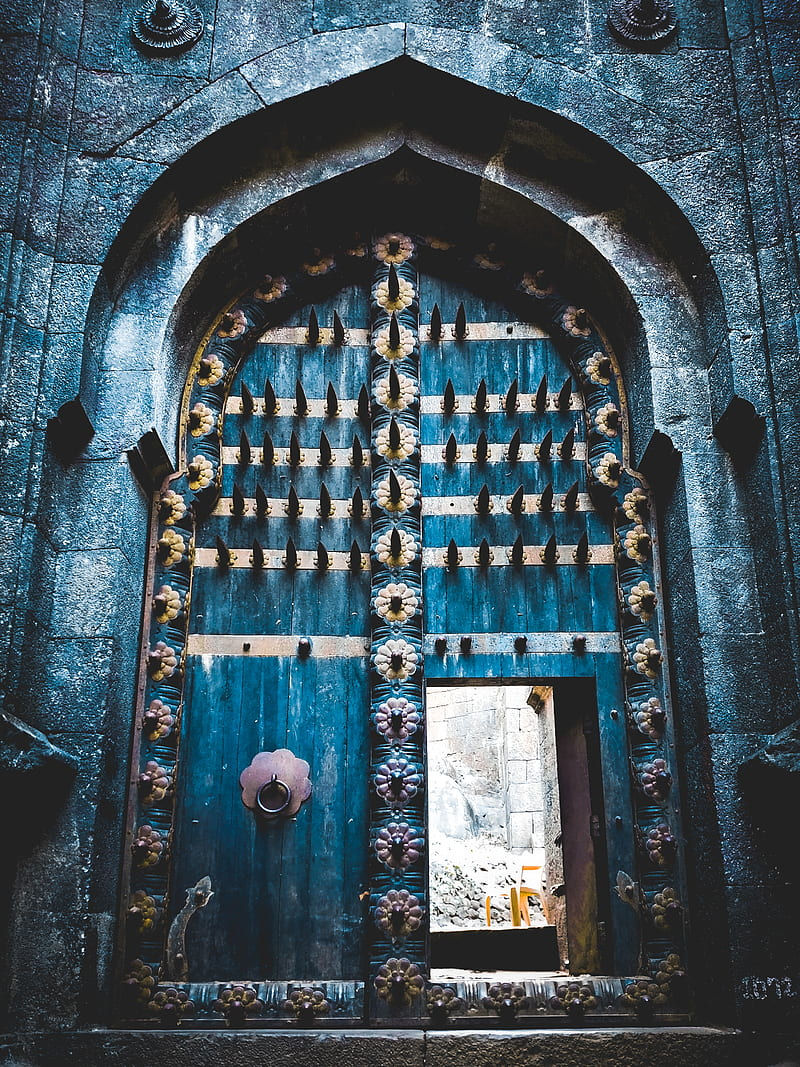
The king’s court, inside the Raigad Fort, has a replica of the original throne that faces the main doorway called the Nagarkhana Darwaja. It faces the East Side. It was here where Shivaji Maharaj’s Rajyabhishek took place. This enclosure had been acoustically designed to aid hearing from the doorway to the throne. A secondary entrance, called the Mena Darwaja on the south side, was supposedly the private entrance for the royal ladies of the fort that lead to the queen’s quarters. The convoy of the king and the king himself used the Palkhi Darwaja. on the north side. To the right of Palkhi Darwaja, is a row of three dark and deep chambers. Historians believe that these were the warehouses for the fort.
One can sight the execution point called Takmak Tok, a cliff from which sentenced prisoners were thrown to their death. This region has been enclosed these days.
A statue of Shivaji Maharaj is established in front of the ruins of the main market avenue that leads to the Jagdishwar Mandir, which has Hiroji Indulkar’s name carved on the first step, his Samadhi.
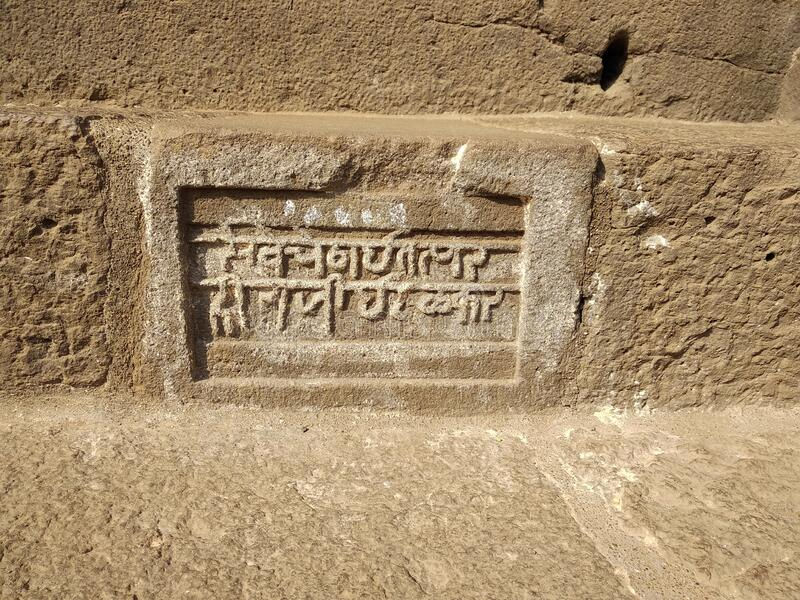
The Samadhi of Rajmata Jijabai, Shivaji Maharaj’s mother, can be seen at the base village of Pachad. Also, well-known attractions of the fort include the Khubladha Buruj, Nane Darwaja, and the Hatti Talav (Elephant Lake).
Hirakani Buruj
The fort has a famous wall called “Hirakani Buruj” (Hirakani Bastion) constructed over a huge cliff. The legend goes “that a woman by the name of Hirakani from a nearby village had come to sell milk to the people living at the fort. She happened to be inside the fort when the gates got closed and locked at sunset. Hearing the cries of her infant son back at the village echo after nightfall, the anxious mother couldn’t wait till dawn and courageously climbed down the cliff in pitch darkness all for the love of her little one. She later repeated this extraordinary feat in front of Chhatrapati Shivaji Maharaj and was rewarded for her bravery.” In appreciation of her courage and bravery, Chhatrapati Shivaji Maharaj built the Hirakani Bastion over this cliff.
It is nearly impossible to estimate the accurate value of the Raigad Fort, one of India’s stunning landmarks and a witness to historic dealings and stories of legendary warriors. It goes 2,700 ft or 820 meters above sea level, with the beautiful Sahyadri mountain range as the background.
There is a single pathway with close to 1,737 steps leading to the Raigad Fort.
Raigad Fort: Historical folklore
The Raigad Fort (earlier called the Fort of Rairi) was seized by Chhatrapati Shivaji Maharaj in 1656 from Chandraraoji More, the King of Jawali. After Chhatrapati Shivaji Maharaj grabbed the fort, he expanded it significantly and named it King’s Fort or Raigad. It later became the capital of Chhatrapati Shivaji Maharaj’s expanding Maratha Empire. The Raigadwadi and Pachad villages are settled at the base of the fort. These villages were vital during the Maratha reign. The climb to the top of the fort starts right from Pachad itself. During the rule of Chhatrapati Shivaji Maharaj, a 10,000-strong cavalry division was always on guard at the Pachad village. Shivaji also built the Lingana Fort approximately two miles away from Raigad. It was used for accommodating prisoners.
Zulfikar Khan captured Raigad in 1689 and Aurangzeb changed its name to Islamgad. Siddi Fathekan captured the fort in 1707 and held it until 1733. After this period, the Marathas recaptured the Raigad Fort and kept it till 1818. The Fort is nestled in the current Sindhudurg District of Maharashtra and the British East India Company targeted it as a major political epicenter. Cannons from the hill of Kalkai ravaged the Raigad Fort in 1818, destroying it. On May 9, 1818, a treaty was executed and the British East India Company obtained control of the same.
As a big tourist destination in Sahyadri of Maharashtra with rich Maratha History
Raigad fort is a big tourist destination in Maharashtra that has an excellent combination of history and nature coexisting. Let’s look at what all travelers should look out for while going to see Maratha Empire’s, Raigad Fort.
Rani Vasa: While going to Raigad fort, do check out the Ravi Vasa or the queen’s chamber, whose structure is still intact. Raigad Fort’s information mentions that this was used by Shivaji Maharaj’s mother and other royal ladies.
Palkhi Darwaja: This lies just ahead of the Rani Vasa. This was the place where Shivaji Maharaj used to pass along with his convoy. On the right, if the Palkhi Darwaja were rooms that were believed to be the fort’s granaries.
The Royal Bath: It has its magnificent drainage system that has impressed historians and architecture lovers greatly. It leads to an underground cellar, which was used for secretive activities in the past including storing treasures garnered from wars, secret conversations and prayers, and so on.
Raj Bhavan: A pious place, this is believed to be the main place where Chhatrapati Shivaji Maharaj used to spend time. This place has seen it all victory, defeat, happiness, sadness, etc. historians mention.
Watchtowers: The fort was guarded by three watchtowers. While two are still standing tall, the third one was attacked by the British and destroyed.
Raigad Fort and Nearby places
Raigad Fort can never be complete without talking about other attractions that are neighbors to Raigad Fort.
Gangasagar Lake: This artificial lake is special because it was created during the coronation of Chhatrapati Shivaji Maharaj. The fort overlooks the Ganga Sagar artificial lake.
Jijamata Palace: Conserved by the archaeological survey of India, this was the palace of Jijamata, the mother of Chhatrapati Shivaji Maharaj, where millions come to pay their respects.
Jagadishwar Temple: An ardent devotee of Lord Jagadishwar, this temple was built by Chhatrapati Shivaji Maharaj.
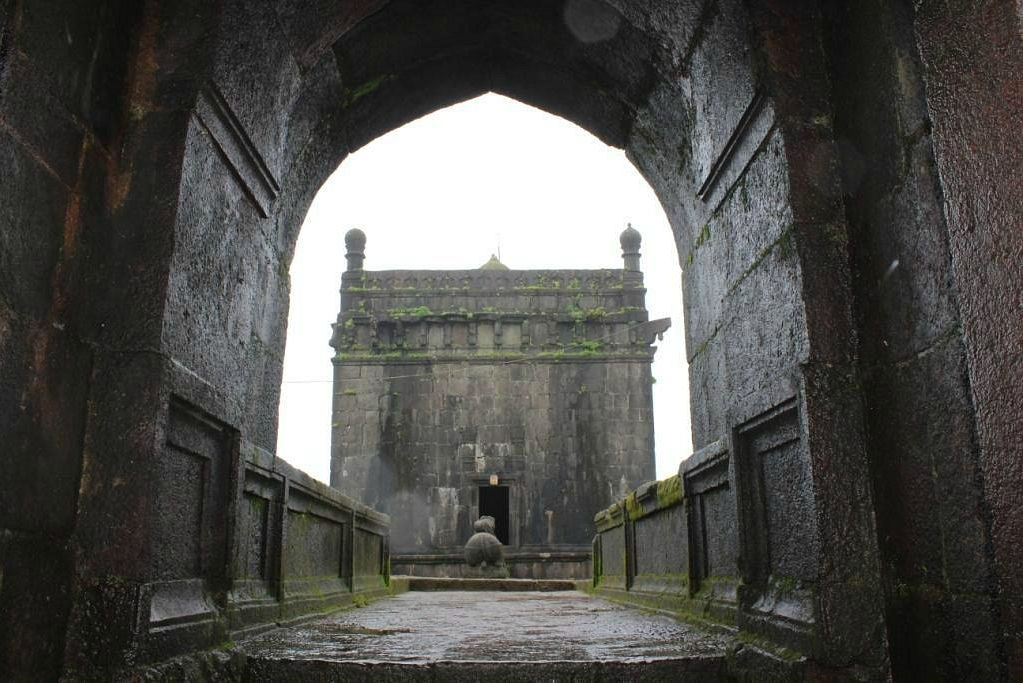
Raigad Museum: This showcases the artifacts, paintings, weapons, and many different things dating back to the days of the Greatest Maratha empire.
Raigad Fort – Latest updates
A gold bangle was excavated from the Raigad Fort in 2021 in a major find for the ASI (Archaeological Survey of India) and the RDA (Raigad Development Authority), The gold bangle may date back to the era of Chhatrapati Shivaji Maharaj. As per the ASI and RDA, this object will help them immensely in knowing more about the past of this fort.
Raigad Says – “Never Bend Your Head, Always Hold It High.”