
The presence of prehistoric ethos in Kanniyakumari is evident from the discovery of the Neolithic era.
The Date of human civilization in this district reaches 4000 years ago.
A handmade coarse earthen jar and some other relics were found near “Thoothur” Village near Kanniyakumari. The shape, fabric, and decorations indicate that they are probably of the megalithic or early historic period.
Till 1956 the Kanniyakumari district was a part of the erstwhile Travancore.
From the traditions prevailing in this region, it is believed without any disbelief, that a great city of Kanyakumari prospered in these regions during the megalithic or early historic period and that it might have been similar to the one which existed in Mohanjadaro and Harappa. In the meantime, the leftovers of this period continued in the sea bed, it has to be assumed that this civilization was wiped out due to sea erosion or the reasons related to it.
Kanniyakumari is mentioned. In this Komari is mentioned as a harbor and the land up to komari is said to be the part of Pandian Kingdom.
Devi Kanya Kumari, தேவிகன்னியா குமரி or देवी कन्याकुमारि is the manifestation of Mahadevi or Adi Parashakti in the form of an adolescent girl child. The Bhagavathi Kumari Amman Temple in Kanyakumari, Tamil Nadu is dedicated to her. It is located at the southern tip of mainland of India, on the confluence of the Bay of Bengal, the Arabian Sea, and the Indian Ocean. Folktale features Sage Parashurama for performing the consecration of this temple.
The Kanyakumari Temple is one of the 51 Shakti Peethas in India.
Kanyakumari is located on the southernmost tip of the Indian Ocean in Tamil Nadu.
Devi Kanya Kumari has been mentioned in Ramayana, Mahabharata, and the Sangam literature works like Manimekalai, Puranaanooru and Nārāyaṇa (Mahānārāyaṇa)
Upanishad, a Vaishnava Upanishad in the Taittiriya Samhita of Krishna Yajur Veda.
The feminine aspects of Adi Parashakti (in their manifested and un-manifested forms) are called Prakriti, and the male aspects are called Purusha.
All the material manifested aspects the Nature is classified as feminine and is the Prakriti or Mother Goddess and also the un-manifested forms of Knowledge, Prosperity, and Power are considered as feminine Prakriti, and it is the source of energy for Creation, Sustain and Control, which is the male aspect (Purusha) of Prabrahma.
Places of Fascination
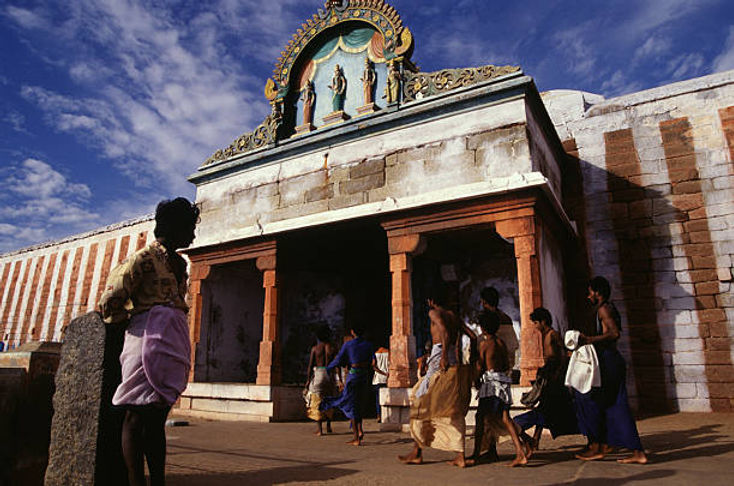
Kumari Amman Temple
This is one of the places in Kanyakumari with a lot of traditional significance in Kanyakumari. This glorious temple is located on the coast surmounting the beach.
Kanyakumari Beach
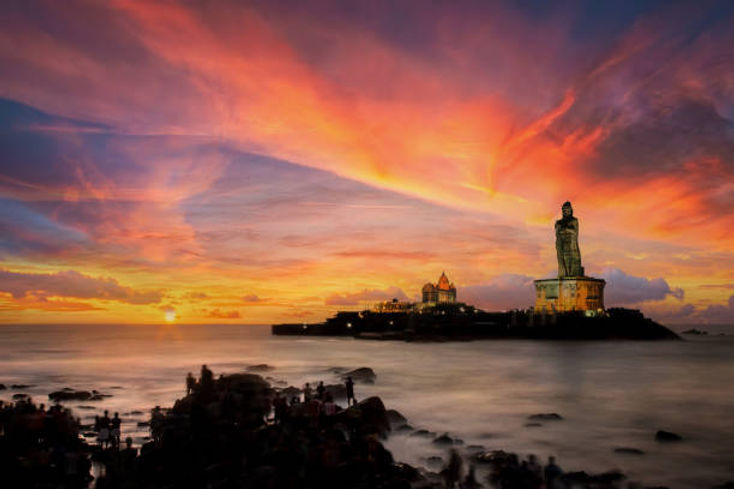
It is Situated in the southernmost part of the Indian mainland, Kanyakumari beach with its attractive beaches, the confluence of three water bodies: the Bay of Bengal, the Indian Ocean, and the Arabian Sea. Amazingly, here you can see that the water of the three seas does not mix, you can distinguish between the turquoise blue, deep blue, and sea green waters of the three seas, though the colors keep changing with the season and the day’s weather.
The Triveni Sangam point is the must-visit place to climb up the eminent lighthouse to exclusively take in its beauty as a watchtower.
Vivekananda Rock Memorial
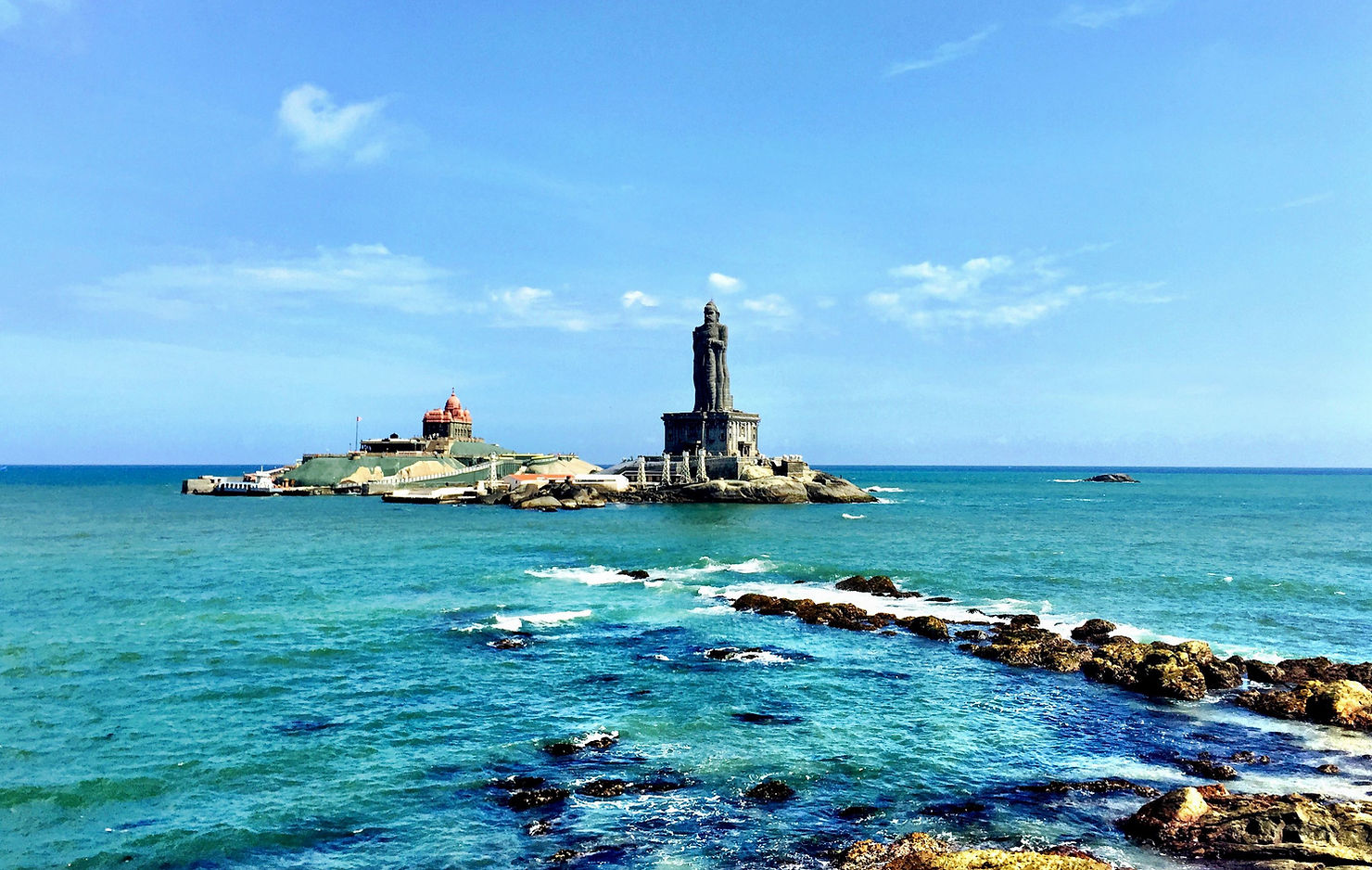
The wonderful Vivekananda Rock Memorial is situated on a tiny island off Kanyakumari. It has the scenic Indian Ocean in its background. It is positioned on one of the two head-to-head rocks projecting out of the Lakshadweep Sea and encompasses the ‘Shripada Mandapam’ and the ‘Vivekananda Mandapam’.
Vivekananda Rock Memorial is about 500-600 meters east of the mainland of Vavathurai in Kanyakumari and can be accessed by regular ferries provided by helpful locals.
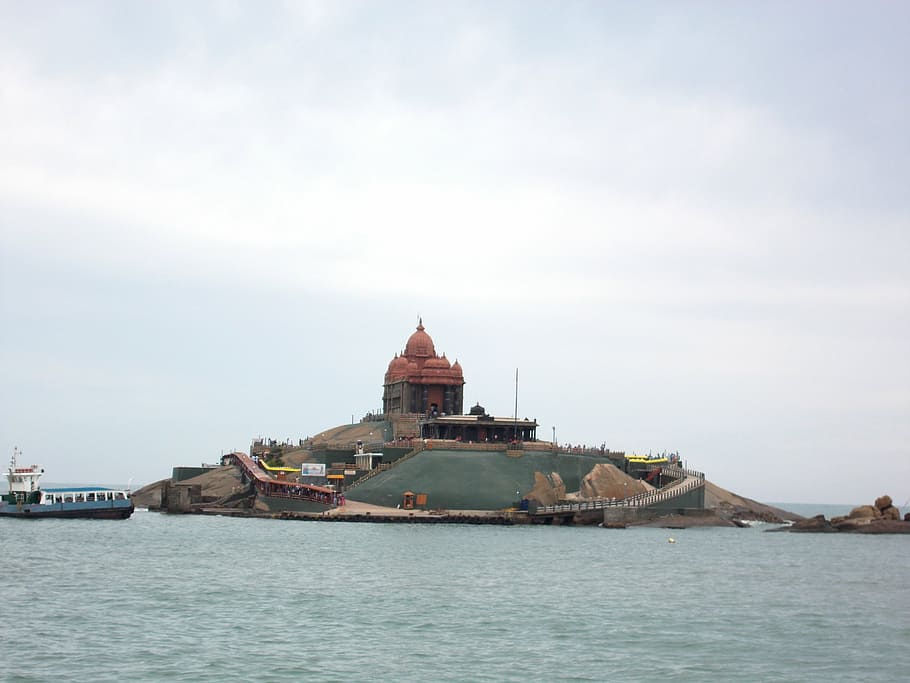
According to historical stories and folk tales, it is assumed that Goddess Kumari performed austerity on the same rock. There is a ‘Dhyana Mandapam’ located beside to memorial, which serves as the meditation hall for the people to meditate. The architectural style is distinguishing and combines various temple styles from all over the Indian subcontinent.
Thiruvalluvar Statue
Dedicated to the proficient philosopher and poet Thiruvalluvar, Thiruvalluvar was the writer of a legendary work in the world of Literature, Tirukkural, the classic Tamil text. In his devotion, the work for the statue started in 1990 and continued till 1999. The attractive statue treasures itself on a small island adjacent to Kanyakumari.
The memorial stances tall at a massive height of 133 feet and is balanced upon a 38-foot pedestal. The pedestal’s height epitomizes the 38 chapters of virtue in Thirukkural. Full of representation and cultural significance, this place is awe-inspiring, and a must-visit.
Ganapati Sthapati carved the statue, and it was revealed on January 1, 2000. The premises of the statue also has a temple which is an antiquated spot for meditation.
Vattakottai Fort
Vattakottai Fort, which interprets as the ‘Circular Fort’ is a seaside fort neighboring Kanyakumari, the southernmost tip of India. This fort is made up of granite blocks along with a part that even extends into the sea. This is a protected site under the Indian Archaeological Department and a major makeover of the fort was undertaken a few years back only.
This fort covers an area of almost 3.5 acres and it is one of the main attractions of historians of India and Tamil Nadu. Situated 7 km north of Kanyakumari in the Taluka place/town known as Agasteeswaram, This fort rests on the coast of the glorious Bay of Bengal.
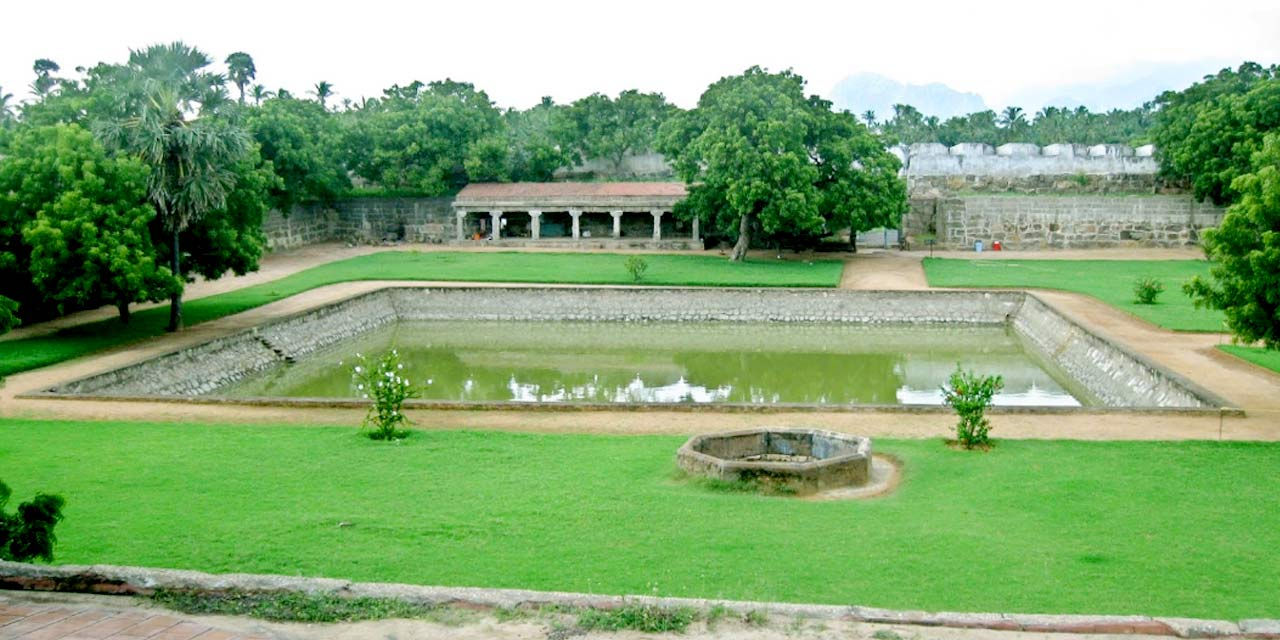
Even though the aesthetics and structural design of the fort are renowned, the main purpose of creating this fort was entirely different. The historical significance of the mighty fortress clubbed with its perfectly picturesque location has made it an actively visited tourist spot. A panoramic view of the Bay of Bengal Sea on one side and the other ornamented with the majestic hills of the Western Ghats,
Trust me this place is mesmerizing.
Triveni Sangam
Traced at the southernmost point of the Indian mainland, Kanyakumari is bordered by the Arabian sea, the Indian Ocean, and the Western ghats. One of the most tranquil destinations in India.
Also known as Cape Comorin, this place satisfies tourists as a pilgrimage sight.
The word ‘Sangam’, derived from the Sanskrit language, means union, and ‘Triveni’ means three water bodies. Which is the confluence of the Indian Ocean, the Arabian sea, and the Bay of Bengal.
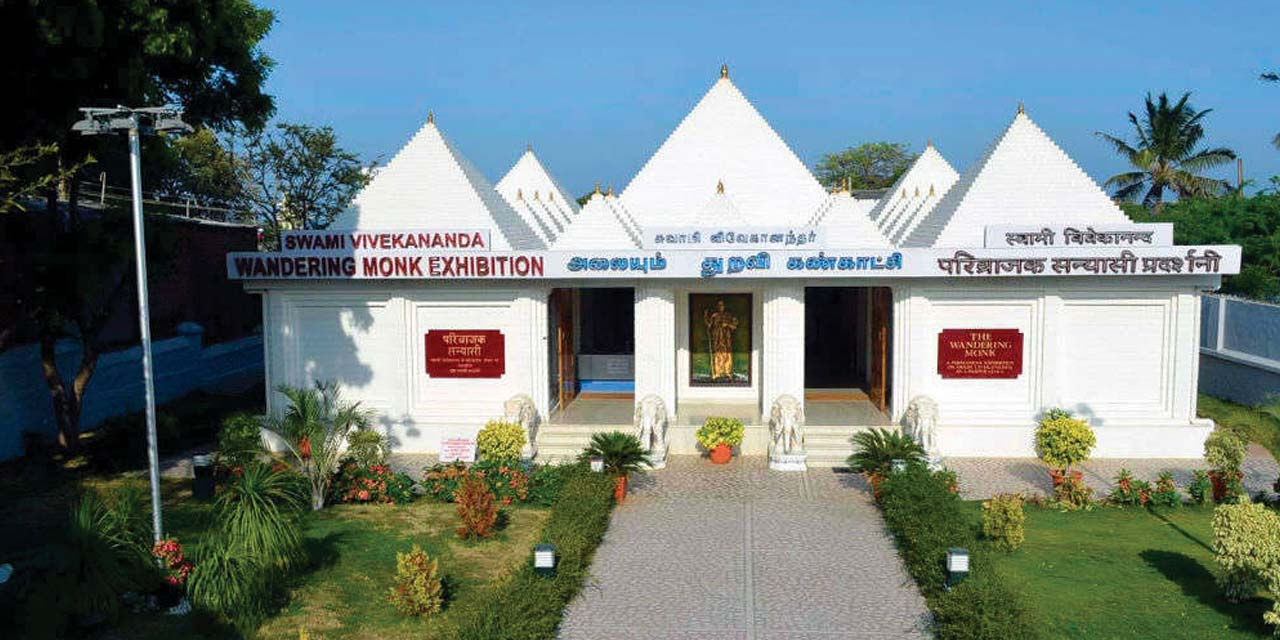
Swami Vivekananda Wandering Monk Exhibition
For travelers and historians keen on Indian history, the Swami Vivekananda Wandering Monk Exhibition is no less than a delightful place to visit. This insightful place gives some certainly interesting insights into the life and works of one of the greatest Hindu apostles, Swami Vivekananda.
The exhibition gives a glance at Swami Vivekananda’s wisdom, sayings, and several encounters during his five years as a wandering monk around India from 1888 to 1893.
“The Wandering Monk” exhibition is located in Kanniyakumari Town itself, the terra cotta design depicts Swami Vivekananda’s Bharat Parikrama pictures with descriptions in English, Hindi, and Tamil.