
Galna Fort
It is a fort located in malegaon taluka Galna – गाळणा किल्ला was a major fort in the south Khandesh area of Maharashtra, India. This fort was an important fort on the Burhanpur -Surat trade route. This is one of the forts in Maharashtra with the bastion and the entrance in good condition. This fort is located on hills between Malegaon and Dhule.
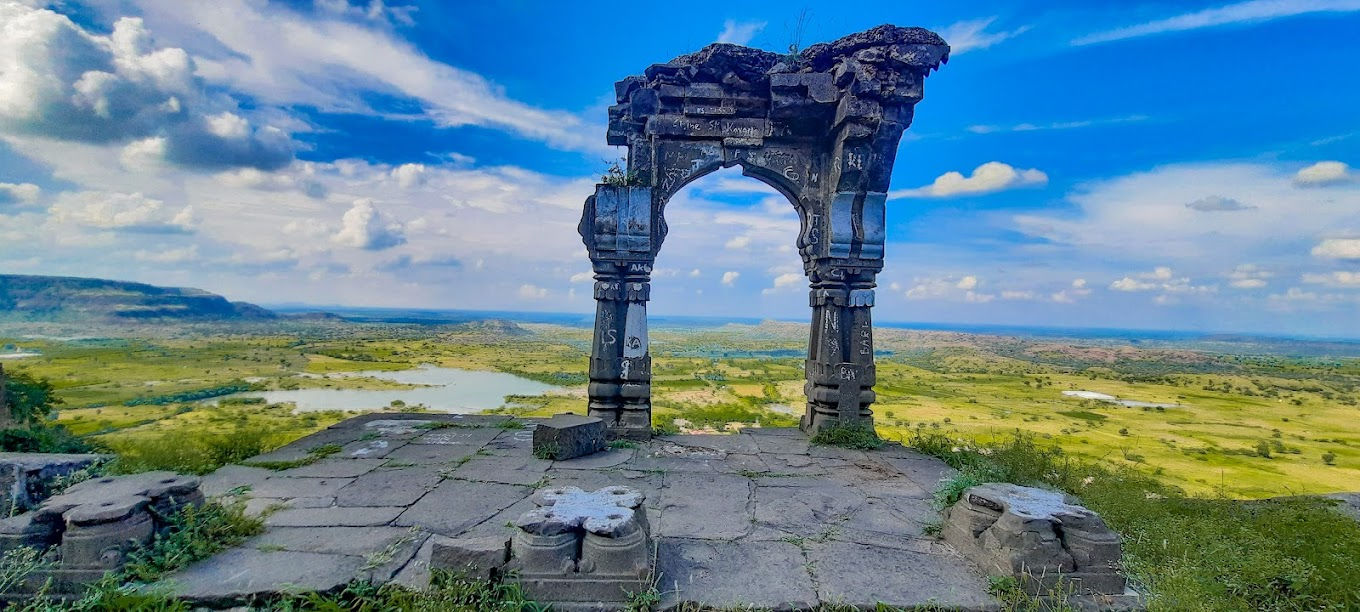
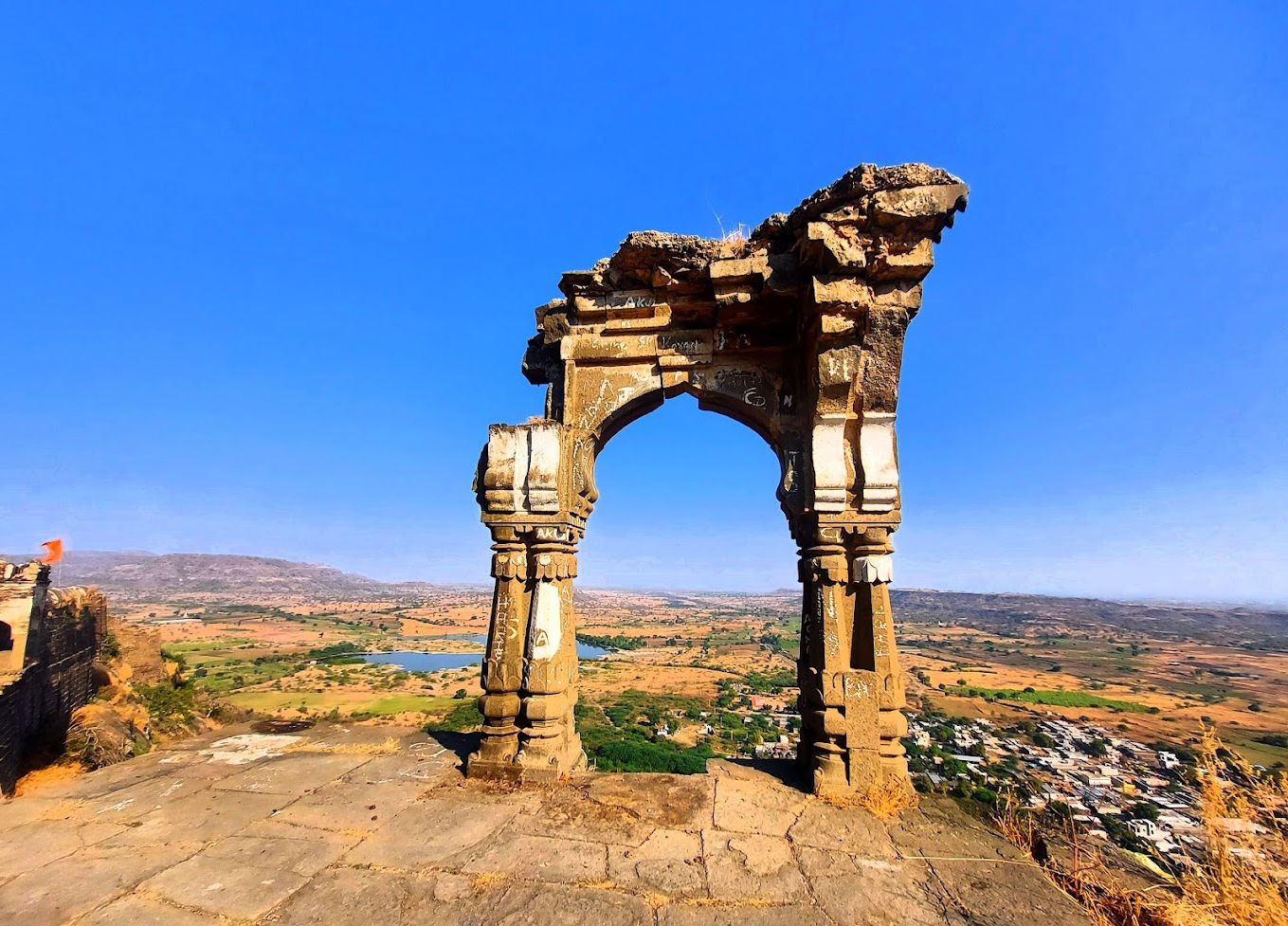
Galna fort is a one day trek in Galna village, which is in taluka Malegaon, Nashik District. Galna village is about 23 km away from Malegaon. Galna fort is very famous for its history and authentic build-up of the fort.
There is a temple at the foot of this fort, and It has Navnathchaurasi Siddha, 12 Jyotirlingas, Ashtavinayak, Nav Durgamata, and other saints; in total, 204 idols found in this temple. Within the mighty Sahyadri, this fort built on the hills of Galna village. This fort is about 2116 feet or 709 meters in elevation above sea level.
How to reach
This fort is located in Malegaon taluka of Nashik district. The base village Galna is well connected by motorable road to Malegaon and Dhule. Regular buses ply from Malegaon to Dongarale village. Dongarale village is 30-15 km from Malegaon as well as Dhule. Dongarale to Galna distance is 4 km.
Historical Importance of Galna Fort
Galna was an important place at the end of the fifteenth century. It lay on the border of the Deccan. It was held by the Maratha when about in 1487, two brothers Malik Wuji and Malik Ashraf, the Governors of Daulatabad took it and held for some time.
In 1506 after the murder of Malik Wauji the fort was under the control of Malik Ahmed Shah Nizam of Ahmadnagar. On the death of Malik Ahmed Shah Nizam of Ahmadnagar on 1510 again the fort was passed to Musalman chief who denied to pay tributes to Maratha chief.
In 1634 Muhammad khan, the Musalman commandant of Galna delivered their tributes to Moghuls. It was attacked by Aurangzeb in 1704 and captured in 1705.
In December 1804 this fort was taken from Holkars by Captain Wallace.
Finally, in March 1818 it was occupied by native Infantry. For a few year after 1818, a mamlatdar held an office in Galna.
Galna fort is well known for its history. The history of Galna fort is exciting and a sign of bravery and intelligence. This fort established in the thirteenth century. This fort reflects the royalty of Rajasthani forts. The history of this fort speaks as Bagool Raja, who ruled Mulher Fort and the whole Baglan Taluka, was under the command of the Rathods. Bahmani and Nizam shah were also unable to defeat the Rathod’s, and at that time, Galna fort was under Bahmani. As soon as Bahmani’s rule came to an end, Nizam shah came to power and captured Galna fort.
Then Sultan Adil Khan Farooqi 3rd, Who was the Sultan of Khandesh. As soon as he came to know that Nizam Shah is now in the power of Galna fort, the Sultan of Khandesh declared war against Nizam Shah in which the Sultan of Gujarat helped Adil Khan in his fight with Nizam Shah.
The war ended in 1526, which started in 1510, and Nizam Shah was still in the power of Galna fort. Then in 1555, Sultan Hussain declared war against Nizam Shah and won the battle.
At that time, Mughals won the Khandesh fort and decided to destroy Nizam Shah’s whole empire. While Mughals were planning, Shahaji Raje revolted against Mughal Badshah. To settle this revolt, Mehmood Khan came into contact with Shahaji Raje and decided to conquer Galna fort.
Meanwhile, one of the Mughal subedars Khan Jamal came to know about the settlement between Shahaji Raje and Mehmood khan, and in no time Mughal Subedar Khan Jamal informed Killedar Mir Qasim by writing a letter to him to bring Mehmood Khan under our consideration and stop Shahaji Raje from conquering Galna fort.
Hence when Shahaji Raje went to capture Galna Fort. Mehmood Khan had to stop him and sent his army back. 7th October 1632 was the day when Zafar Bed Balooj appointed a new Killedar for Galna fort.
From 1676 to 1752, many Killedars protected Galna fort in which some of them were Lashkari Bed, Mohammad Waris, Abdul Qasim, Diler Himmat, and many more. In 1752 Maratha’s fought with the Mughals and conquered many forts in which one of them was Galna.
At that time, Peshwa Malharrao Holkar was the Killedar of Galna. In 1818 Britishers defeated the Peshwas and conquered Galna fort, who understood the real importance of this fort.
The friendship between Hindu and Muslims is being depicted on this fort as the fort has Mahadev temple as well as Masjid in it.
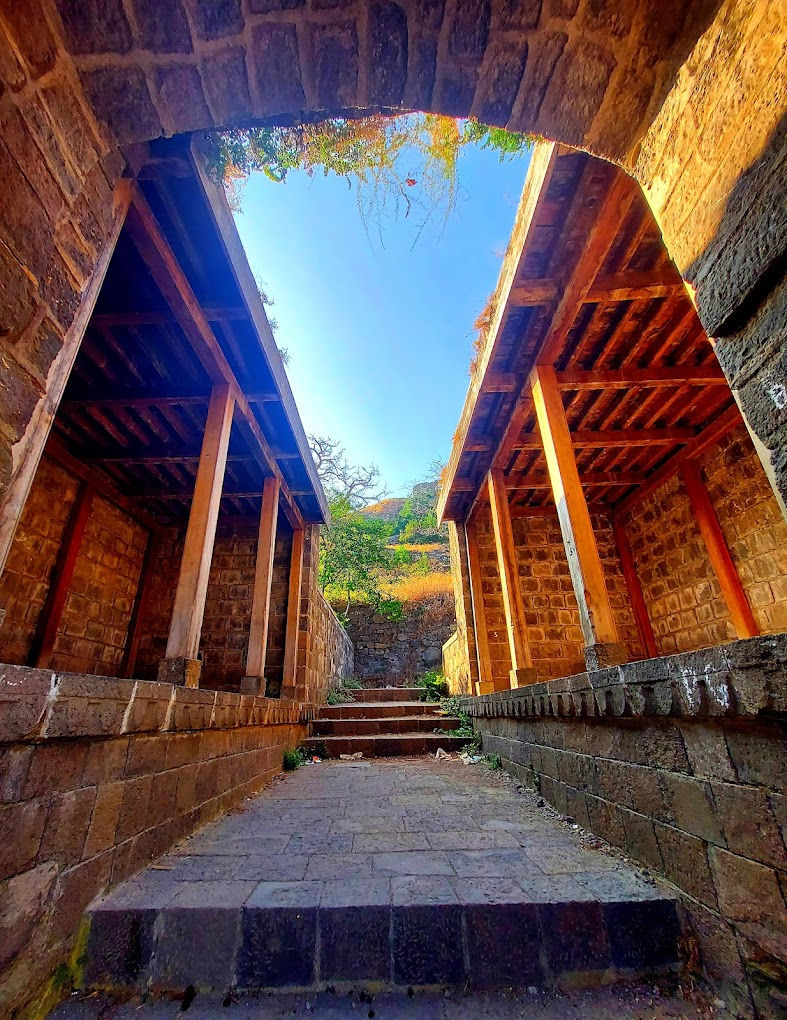
This incredible history of this fantastic fort is still a mystery for many. There are many secret doors in the fort, which makes us realize how essential and descriptive a fort can be.
Structures & Architecture of the Galna Fort
The Galna Fort has several structures that serve as a reminder of the past. The fort has four doorways. Galna fort is one of the few that has the tomb of a British officer. Rumors suggest that he committed suicide because he accidentally killed someone.
Galna Fort For Trekkers
Galna fort is a half-day trek. One must find it easy to climb and explore the fort. The fort is widely spread and reminds us of the richness and royalty of Rajasthani forts in here Maharashtra itself. No special equipment required for Galna fort. One interested in the detailed history of Galna can hire a guide who is available at the village near the fort.
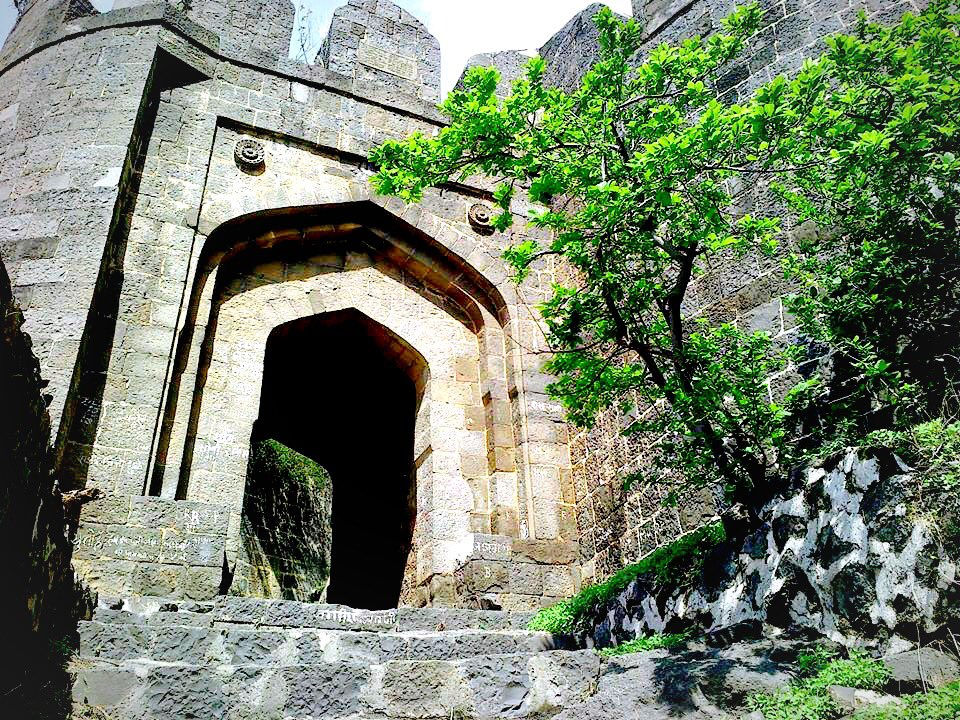
A broad flight of steps leads to the fort. There are four gateways, namely, Parkot, Lokhandi, KotvalPir, and Lakha, of which the Lokhandi gate is remarkably handsome and lined with iron plates from which it takes its name.
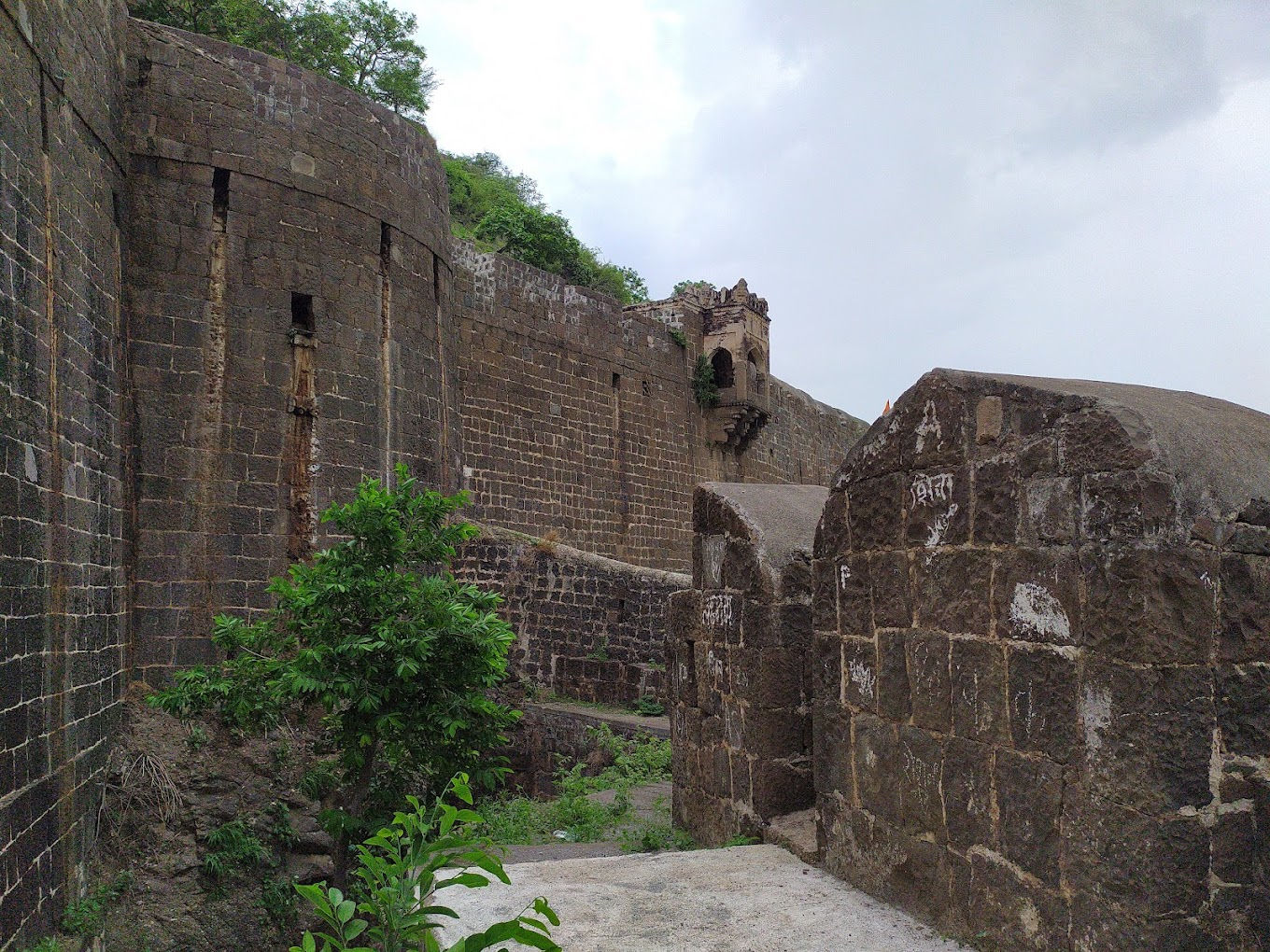
The upper walls of the fort consist of bastions, which are semi-circular in shape. One of the exciting areas here is a mosque topped with six small domes.
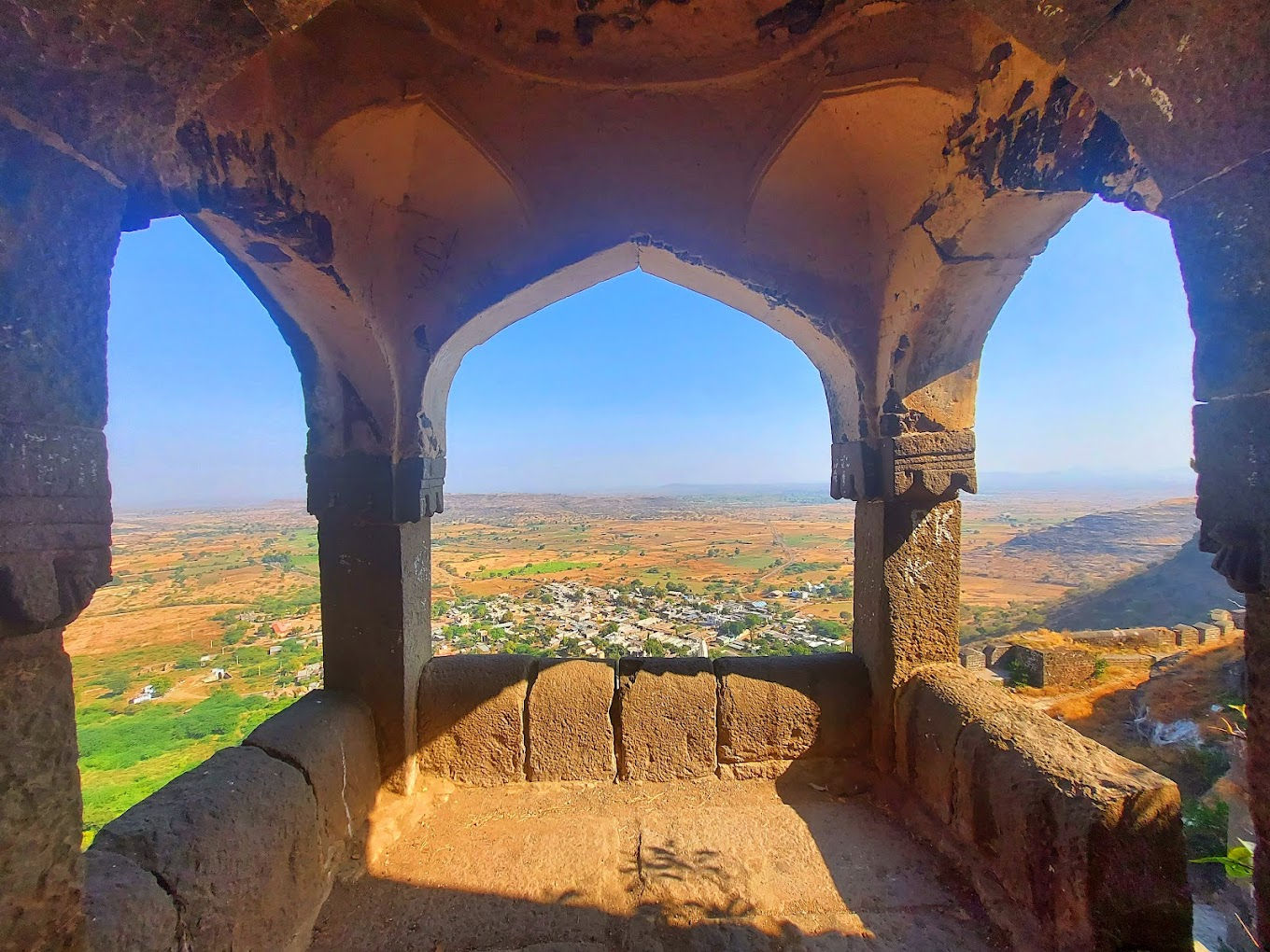
The mosque consists of one room, about forty-eight feet long and twenty-five broad. It has a handsomely carved stone window opening on a balcony surmounted by an elegant dome that offers a magnificent view.
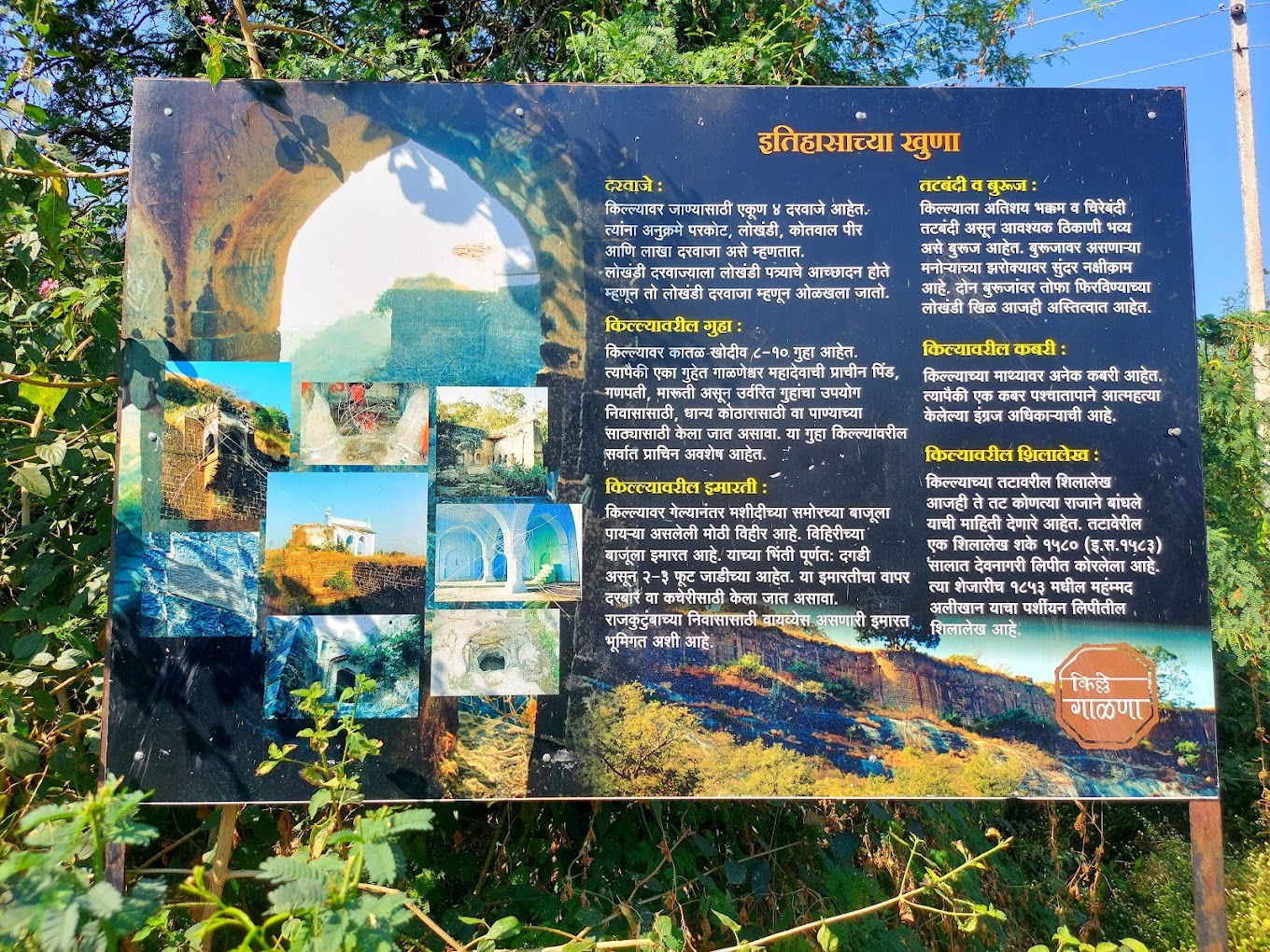
It is inclusive of a small room and a beautifully carved out stone window. The mosque is accessible through a stone staircase. Besides,
the tomb of a European officer, believed to have committed suicide in grievance for having killed an older woman, can be seen. There are also seven other tombs on the hilltop. The ruins of the Rang Mahal, also known as Pleasure Palace, can be seen nearby.
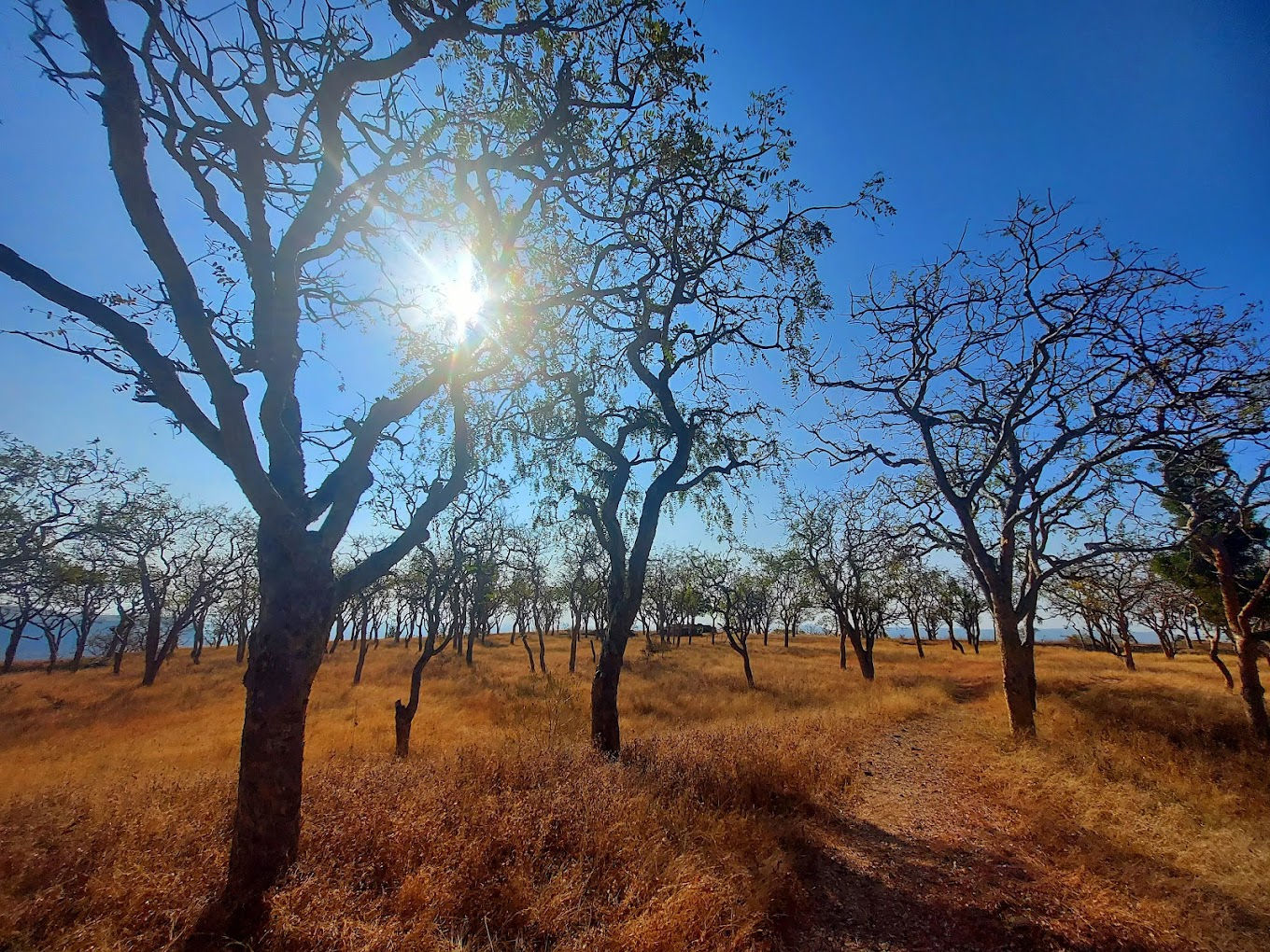
“Somewhere between the bottom of the climb and the summit is the answer to the mystery why we climb.”
— Greg Child
Leave a Reply