
Bienvenue à Pondy!
Pondicherry – A Corner of India Which is Forever France
The union territory of Puducherry (formerly Pondicherry;
also known as ‘Pondy’) was under French rule until 1954. Some people here still
speak French (and English with French accents).
Hotels, restaurants, and ‘lifestyle’ shops, etc. sell a seductive vision of the French-subcontinental stuff like aesthetic, enhanced by Gallic creative types and Indian artists and designers.

The internationally famous Sri Aurobindo Ashram which was
the major attraction of my visit and its offshoot just north of pondy, “Auroville”,
draw large numbers of spiritually minded and peace-seeking visitors.
Thus Pondy’s vibe: less faded colonial-era villa, more bohemian-chic, New Age–meets–Old World hang-out on the international travel trail with a Tamil touch to all things.
The older ‘French’ part of town THE WHITE TOWN (where I probably spend most of my time) is full of quiet, clean streets, lined with bougainvillea-draped colonial-style townhouses numbered in an almost logical manner.
The newer side of Pondy is typically, hectically South Indian.
Enjoy fabulous shopping, French food, beer (au revoir Tamil
Nadu alcohol taxes), and plenty of yoga and meditation.
French Connection of Pondicherry
AS colonies declined, Pondicherry was not exactly a success story. Almost immediately after the French set up this lovely nugget on the Bay of Bengal in 1674, it was captured by the Dutch, retaken by its founders, then sacked and destroyed by the British.
And though the French kept rebuilding it, Pondicherry never became more than a
stopover on the way to Indochina.
Even after Pondy, as it is nicknamed, rejoined India — late, in 1956 — it languished, out of step with the rest of the nation.
In other words, for most of its history, Pondicherry was a backwater, in decline.
No more. Today, Puducherry, as it is officially known but rarely called, is capitalizing on a glammed-up version of that history, and emerging as an artsy, design-savvy destination with a quasi-Gallic approach to eating, drinking, shopping, and relaxing.
It’s like India seen through a French lens, or maybe vice versa.
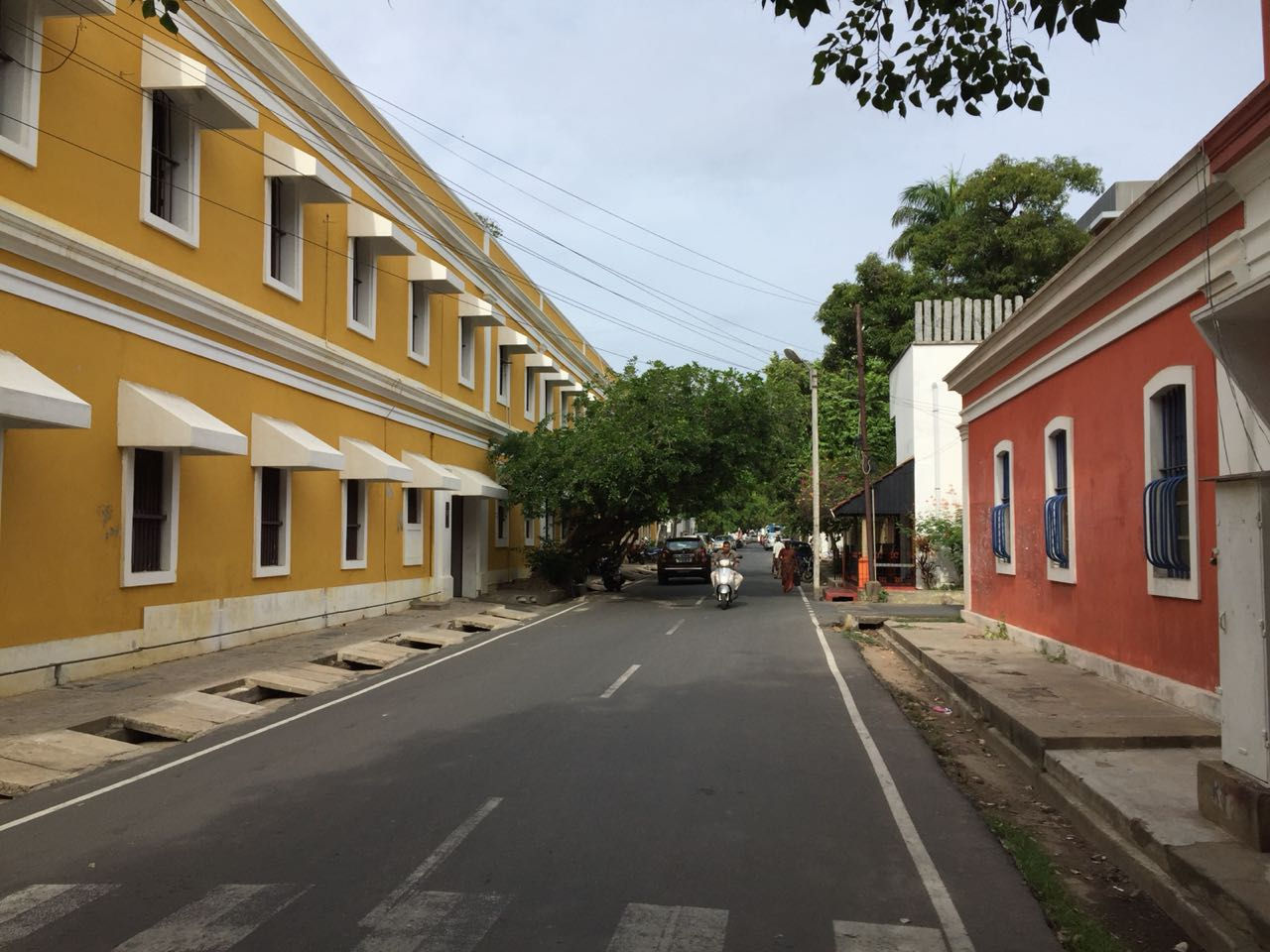
On the southeastern coast, about 150 miles south of Chennai, Pondicherry is, for an Indian city, tiny. Just about a million people live there, mostly in the types of charmless, three- and four-story concrete buildings erected all over the poorer parts of Asia. But near the Bay of Bengal, the cityscape changes drastically. Soon you see tile roofs and wooden
shutters, balconies, and colonnades, wide brick streets, and pastel Catholic churches — the neighborhood once known as the Ville Blanche, or White Town, where the colonists lived.
Here, under a very un-Indian blanket of tranquillity,
Pondy is exploding. In less than a decade, the local branch of the Indian
National Trust for Art and Cultural Heritage has contributed to the restoration
of dozens of historic structures, from private homes to former governors’
residences (a description applied to half the buildings in Pondicherry).
I Was Astonished at the Place called AUROVILLE
What Is Auroville?
Auroville was founded in 1968 by Mirra Alfassa. The purpose of Auroville is to realize human unity Auroville is a township in Viluppuram district in Tamil Nadu. Some of its parts are in Puducherry as well.
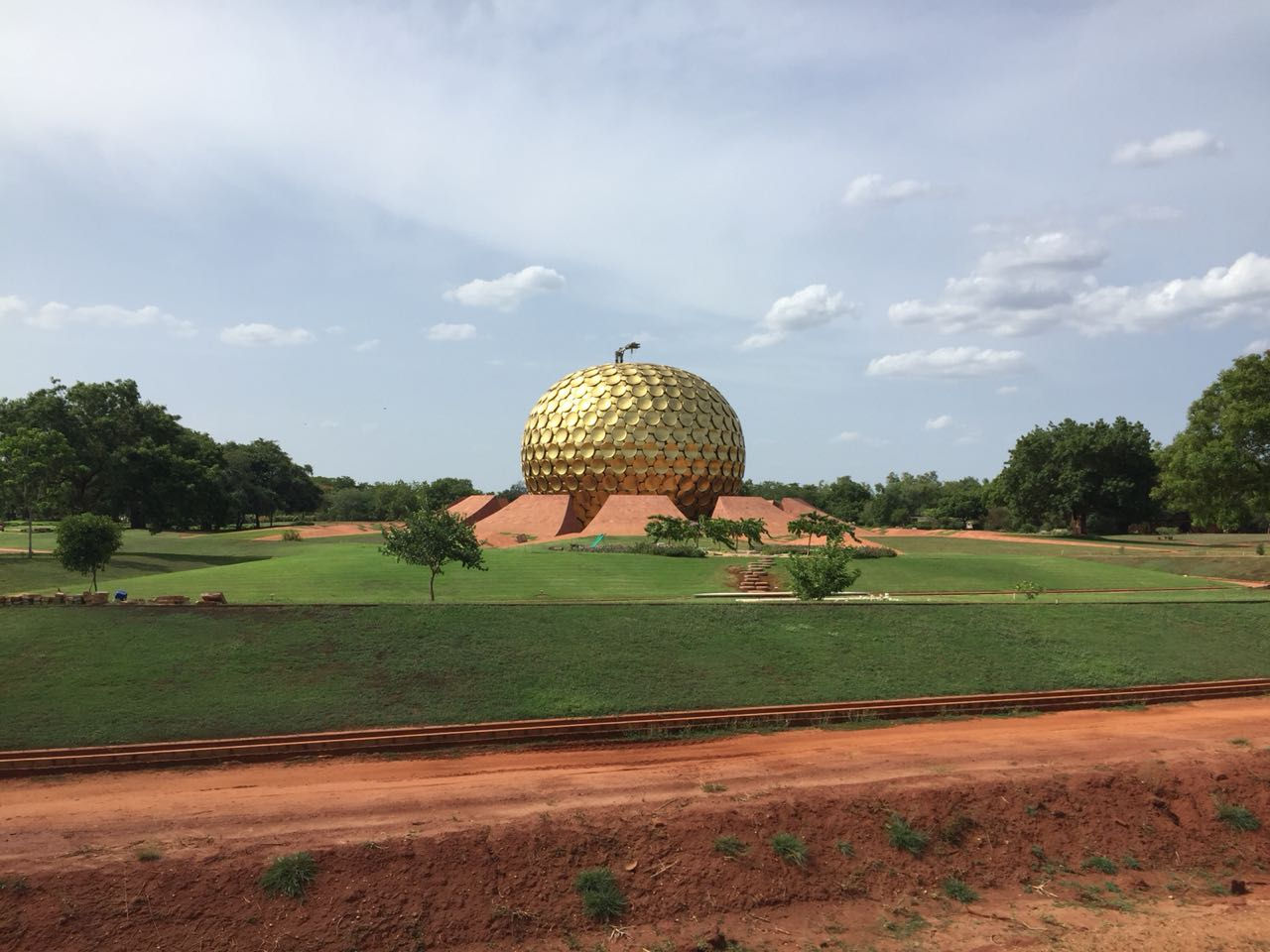
It was founded in 1968 by Mirra Alfassa (known as “the Mother”) and designed by an architect named Roger Anger. The motive behind the idea of Auroville is to realize human unity.
It wanted to be a universal town where the people of all countries can live in peace and progressive harmony above all creeds, all politics, and all nationalities.
Auroville is a growing community of thousands of people from 50+ nations and the vision is that it belongs to nobody in particular but all for humanity.
The best time to visit Auroville is November – March. Auroville has Matrimandir, Auro beach, and Botanical gardens inside its territory.
Aurobindo Ashram, Pondicherry
Address: Junction of Manakula Vinayagar, White Town, Marine Street, Puducherry,605002
Opening time: 8:00 am – 12:00 pm & 2:00 pm – 6:00 pm
Entry Fee: INR 50
Famous for: Spirituality and Meditation
Visit Duration: 2 to 2.5 hours
Best time to visit: Winters are the ideal time to visit the Aurobindo Ashram. Apart from that, 15th August is an important day in this complex.
How to reach: You can take a cab or a rickshaw could be hired for reaching the complex.
A Glimpse of Aurobindo Ashram, Pondicherry
It was established in 1926, the Ashram has many community members who live in the complex and work towards social and moral development for everyone including themselves.
The Ashram was founded by Sri Aurobindo and his French collaborator Mirra Alfassa, also known as the Mother. The Mother ran the ashram her life, teaching the visitors like yoga, meditation, and Indian philosophies.
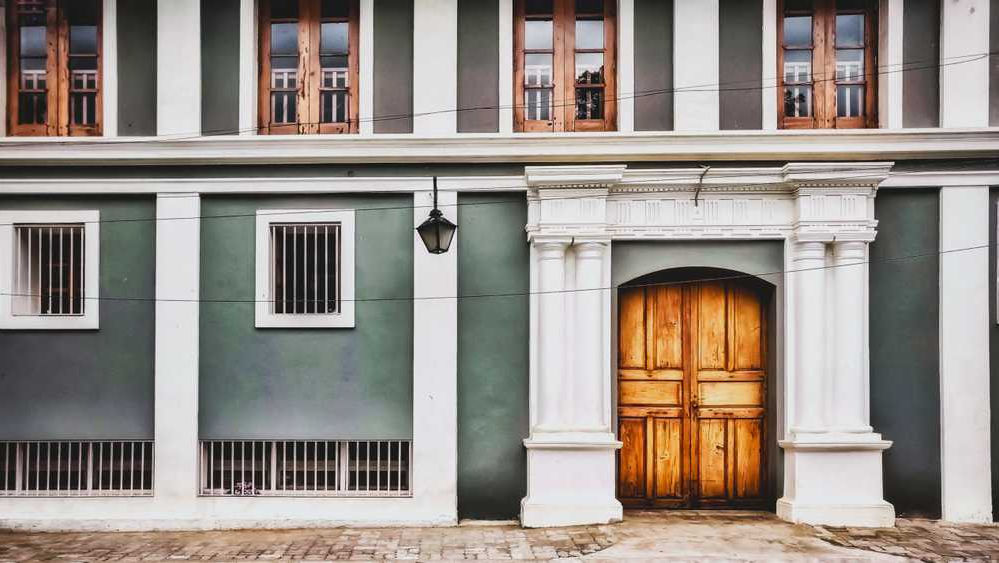
Based on the doctrines presented the organization works towards internal spiritual awakening. As you enter the ashram premise you are swept in with a feeling of warmth and peace, which is rarely found nowadays. The ashram complex has a bookstore that sells in-house books and merchandise for the guests. (This bookstore is mesmerizing due its collection on spirituality and peace at the place)
We can sit around the Samadhi of Mother and Sri Aurobindo, and meditate.
The Aurobindo Ashram, Pondicherry is a peaceful the place where visitors can have a once in a life experience.
Sri Aurobindo
Before becoming an Indian philosopher and mystic, Sri Aurobindo was a zealous participant in the Indian freedom struggle movement. Although he had streaks of the philosophical blend, his mystical and spiritual experiences during his jail term influenced him to leave politics and focus on spiritualism.
He came to Pondicherry, then a French colony, and established his ashram with just a handful of followers. With time, the number of disciplines increased and the center became one of the popular centers for spiritualism in India.
Please, Do Visit For Indian History and Culture Guys. And Try to Follow all the fundamental duties being an Indian citizen. Prohibit the public roads and “Chauraha’s ” for any time of public gathering.
Do not gather, purposefully to make the Blockage of roads which impacts badly on daily life and seriously affects emergencies. Does this really make sense?
Behave and follow laws that make a beautiful society. Stop being the blind believers in anything.
That will make sense in Reality

Leave a Reply