
आपूर्यमाणमचलप्रतिष्ठं
समुद्रमाप: प्रविशन्ति यद्वत् |
तद्वत्कामा यं प्रविशन्ति सर्वे
स शान्तिमाप्नोति न कामकामी
Translation :
Just as the ocean remains undisturbed by the incessant flow of waters from rivers merging into it, likewise the sage who is unmoved despite the flow of desirable objects all around him attains peace, and not the person who strives to satisfy desires. It is one of the major and oldest cities in the Indian state of Rajasthan and the center of the eponymous Ajmer District. Located at the center of Rajasthan and known as heart of Rajasthan.
The city was established as “Ajayameru” (“Invincible Hills”) by a Chahamana ruler, either Ajayaraja I or Ajayaraja II, and served as their capital until the 12th century CE.
Home to the dargah of Moinuddin Chishti, Ajmer is one of the most important destinations of Islamic pilgrimage in South Asia.
The Ajmer Dargah Sharif is a famous and pristine Sufi shrine.
Khwaja Moinuddin Chishti, who was a Persian Sufi saint, ascetic, philosopher, and preacher, is enshrined in this divine place owing to his secular preaching. He is believed to be the descendant of Muhammad. It is believed that if you pray for anything with a pure heart at the Ajmer Dargah, it is destined to be fulfilled for sure.

Places of Interest at Ajmer Dargah
This respected shrine was built by the Mughal Emperor Humayun having a series of massive doors boasting attractive carvings entering the Dargah. These amazing doors are made up of pure silver, and the intricate carvings are a real treat to the lookout.
At Courtyard, one can have a glimpse of the great tomb of the devout saint, Moinuddin Chishti and this is carved through marble. At the top, there is gold plating, protected by a railing that is made up of marble and silver.
Here one can feel the absolute sense of peace, tranquility, and serenity which you would rarely find anywhere!
This shrine is located about 2.5 km away from Ajmer Railway Station.
Other Attractions in the Premises
One can also visit the Nasiyan Temple of Ajmer and which is believed to be its Golden Temple.
This is a two-story temple with gorgeous creations decorated attractively with exquisite stones amongst gold, silver, etc.
The Nizam Gate
At the entrance, there is the main gate of the shrine followed by the Shahjahani Gate. After this gate, there is the Buland Darwaza at which the ‘urs’ flag is hoisted to mark the beginning of Moinuddin Chishti’s death anniversary rituals.
The “Jahalra”
When Hazrat Khawaja Moinuddin Chishti was reigning in the place, The premises were the main source of water. The “Jahalra” was the foremost source of water. Today also, this is used for all the ceremonies and rites that were performed within the premises of the dargah.
Qawalli and Inspiration:
Almost all the devotional singers all over the world hall dedicate qawwalis to praising Allah And they call it a “mehfil-e-same” inside the Dargah premises.
Interesting Facts:
Inside the Dargah premises, an ample amount of food is prepared during the night and distributed to the public in the form of Tabarruk, which means a blessing.
The 33 Quranic verses together with the 99 sacred names of the Almighty have been attractively emblazoned on the Jama Masjid, which is a real treat to the eyes.
The Great City – Ajmer
It is situated in the South west of Jaipur, Ajmer is an oasis, one can say which is wrapped in the green hills. Ajmer was founded by Raja Ajay Pal Chauhan in the 7th Century A.D. and sustained to be a key center of the Chauhan power till 1193 A.D. After Prithviraj Chauhan lost it to Mohammed Ghori. In the meantime, Ajmer became the home base to many reigns.
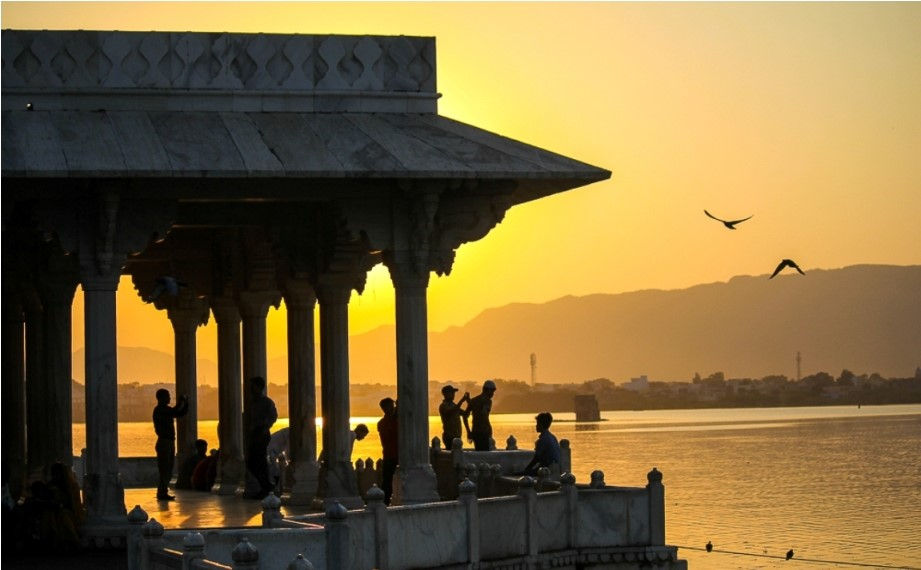
Along with the History – Today also Ajmer is a prevalent pilgrimage for Hindus as well as Muslims.
Particularly well-known is the Dargah Sharif tomb of the Sufi saint Khwaja Moinuddin Chisti, which is equally revered by the Hindus and Muslims. Ajmer is a cultural and educational center. Many students from all over India since British times chose Ajmer for its prominent Mayo College (exclusively for Indian nobility). Ajmer itself is a place with plenty of historical value and traditional cultural places emotionally involved in it.
The town of Ajmer – played a surprisingly important role in India’s history. Located at the rocky Aravalli Hill’s end and the beginning of the great Indian Thar Desert.
Pushkar
Ajmer hosts all of the devotees and visitors of Pushkar (14 km.) as a base town.
Pushkar is said to be the abode of Lord Brahma, lying to its west having an amazing temple and a picturesque lake. The Pushkar Lake is a holy spot for Hindus. In the month of Kartik (Oct./Nov.), devotees throng in large numbers to take a dip in the sacred lake of Pushkar.
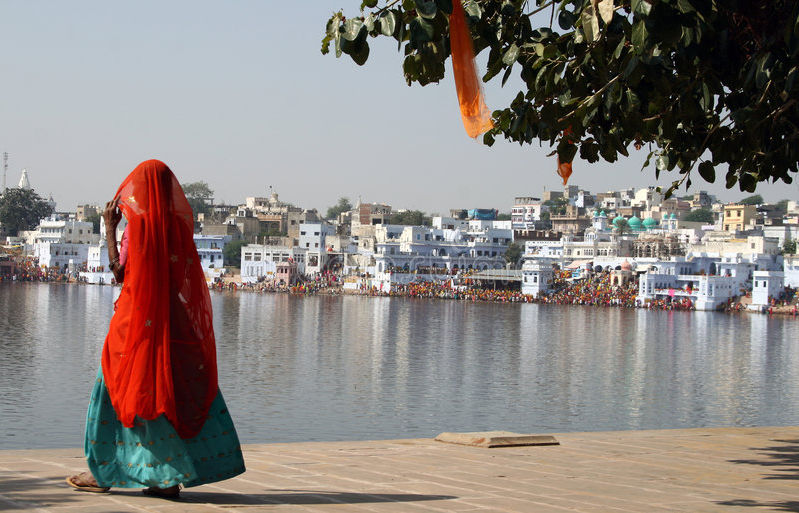
Taragarh This was initially the stronghold of the commanding Chauhan Dynasty – Rajputs, who built a fort of Taragarh- India’s first ever hill fort built in the 7th century.
Ajmer was ruled by the great Raja Prithvi Chauhan the last Hindu king, Mughal Emperor Akbar, and The Marathas, particularly the Scindias of Gwalior.
After 1818, Ajmer had come under the power of the British.
Frankly Speaking, it is the most charming of tourist cities in India. “The heritages tell the whole history of a nation. Protect it and Love Your Nation”
“If we can’t protect the Earth, can’t protect the sky; if we can’t protect our sacred sites, then we’ve failed the world“
Leave a Reply