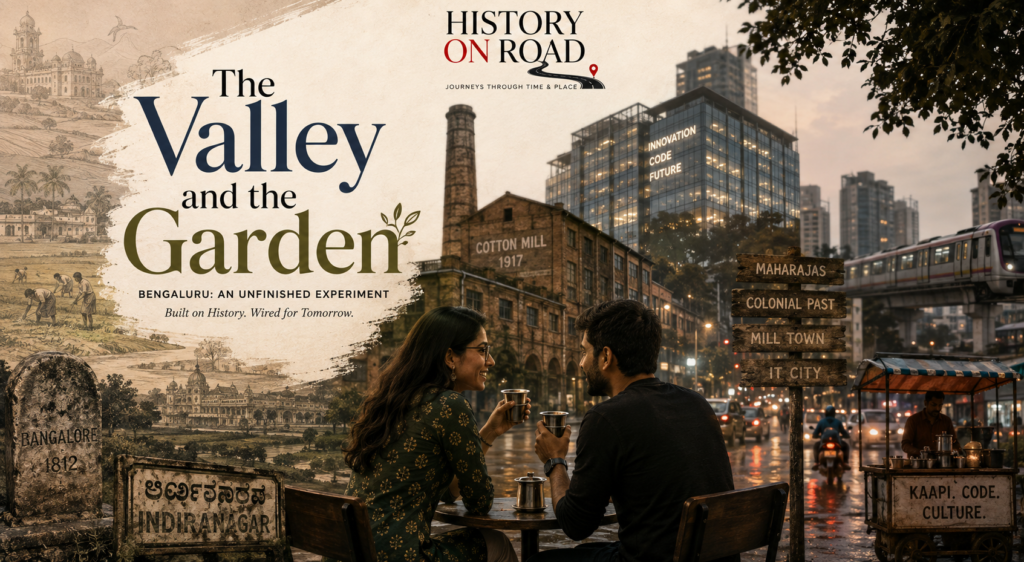

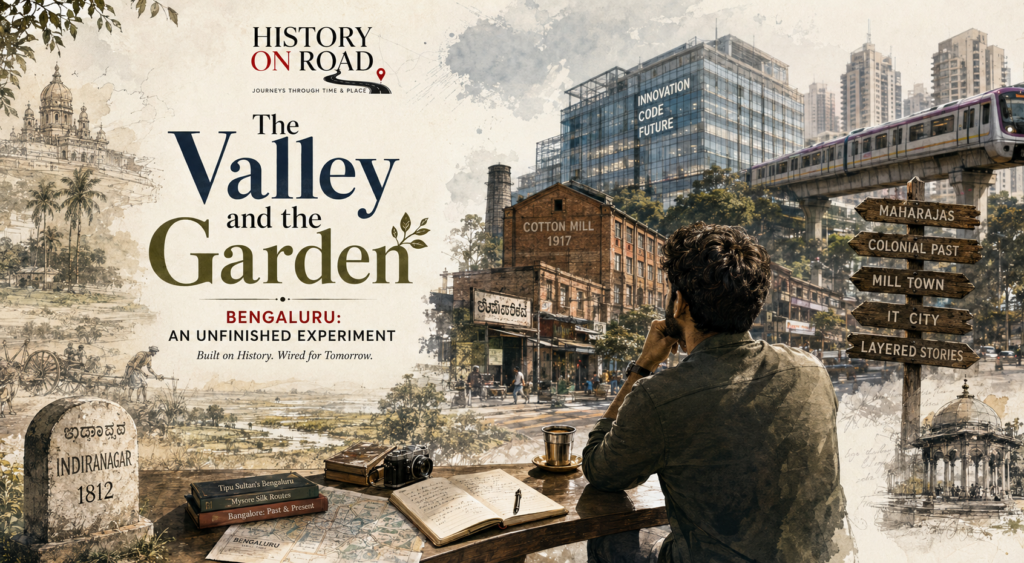
The rain had just let up over Indiranagar, leaving the auto-rickshaw horns sounding wetter than usual, when Ratna slid her phone across the table.
“Read this,” she said. “It’s got half of LinkedIn fighting.”
Shiva wiped condensation off his glass of filter coffee and squinted at the screen. A techie’s post, gone properly viral: San Francisco and Bengaluru are not comparable. One is a city built for founders. The other is a city that happens to have founders in it.
He read it twice, then set the phone down like it had personally offended him.
“He’s not wrong,” Shiva said carefully, “but he’s not right either. That’s the most Bengaluru answer I can give you.”
“Convenient,” Ratna said. “Give me the wrong part first.”
They were sitting at their usual place near Defence Colony — a Udupi joint that had been serving the same filter coffee since before either of them was born, wedged now between a cold-pressed juice bar and a WeWork. Shiva had joined the company eleven months ago, transferred from Pune. Ratna had grown up four kilometres from where they sat, in a house her grandfather built when this was still called a “garden city” without irony.
“The wrong part,” Shiva said, “is treating it like San Francisco is the finished version of what we’re becoming. Like Bengaluru is SF’s rough draft. That’s not comparison, that’s a hierarchy dressed up as an observation.”
“Okay, professor. And the right part?”
“The infrastructure complaint. He’s not lying about that.” Shiva gestured out at the road, where a stalled bus and three motorbikes were negotiating the physics of a pothole. “Nobody in SoMa worries their fibre connection depends on a monsoon.”
Ratna laughed. “You’ve been here eleven months and you’re already doing the pothole bit.”
“I’ve earned the pothole bit. Outer Ring Road took me ninety minutes yesterday. For twelve kilometres.”
“You know what that road used to be?” Ratna said. “Paddy fields. My grandfather has photos. Where your office tower is, there were rice paddies in the seventies. This whole stretch was orchards and lakes thirty years ago. We didn’t zone a tech corridor — we just kept adding companies to a city built for a fraction of this many people, and nobody ever sat down first and planned it properly.”
“That’s his point, though. San Francisco has cable cars from the 1870s still running. It built for permanence.”
“San Francisco also has a housing crisis so bad teachers commute two hours to afford rent,” Ratna said. “Trade Bengaluru traffic for California housing prices? I’ll take the potholes.”
Shiva held up both hands. “Not what I’m saying. The cultures really are different, and not just the roads. Out there, failure is a credential. You burn a round, fold the company — fine, next pitch deck. Here, tell your uncle you quit Infosys to start something and it didn’t work, that’s a topic at every wedding for five years.”
Ratna stirred her coffee. “True. My cousin tried a D2C startup, it folded, and now every family function someone asks ‘so what happened to that business, beta’ like they’re asking about a diagnosis.”
“Right. That’s not an infrastructure problem, that’s a five-generations-of-‘get a stable job’ problem. Roads won’t fix that.”
“But that’s not the whole city either,” Ratna said. “Two streets from here is a hundred-year-old cotton mill turned co-working space. My father worked in its actual incarnation, when it made yarn, not decks. That’s not San Francisco’s garage-startup myth. It’s a completely different story — Mysore silk trade, British cantonments, Tipu Sultan’s armouries, then Texas Instruments opening an office in 1985 because the weather’s decent and the professors are good, and thirty years later half the city works in towers built on old lake beds.”
Shiva leaned back. “That’s a better rebuttal than anything in the comments.”
“The comments are a war zone. Half say ‘finally someone said it,’ the other half say ‘go back to SF and enjoy your six-hundred-dollar studio with no kitchen.'”
“There’s a third camp,” Shiva said, scrolling. “The ‘why compare at all’ camp. Someone wrote — ‘Bengaluru isn’t trying to be Silicon Valley, it’s Bengaluru with a Silicon Valley economy stapled onto a Mysore-era city plan, and that’s an unfinished experiment, not a failed one.'”
“I like that one.”
“It’s honest about the seams. M.G. Road, built under British rule, sits a few kilometres from Cubbon Park, laid out for a maharaja’s leisure, which sits near a metro line that didn’t exist when I was in school, which sits near your cotton mill turned co-working space. Nothing here gets demolished for the next thing. It just gets layered.”
Ratna smiled. “Eleven months and you’re writing my city’s biography back to me.”
“Also I’ve had a lot of time to think, stuck on the ORR.”
The evening crowd was filling the street outside — techies in company hoodies, a man selling roasted peanuts from the same spot he probably had for twenty years, an old Kannada film song crackling from a two-wheeler idling at the signal.
“Here’s the actual difference, though,” Ratna said. “Nobody who built San Francisco’s tech scene had to explain it to their grandmother. Every founder here does two jobs — building the company, and translating what it does into something that makes sense at a family dinner. That’s not in anybody’s viral post.”
“That’s not a disadvantage. That’s a tax you pay for staying tethered to something. SF folks treat being unmoored as a feature — half of them aren’t even from California.”
“Sure. Half our engineers aren’t from Bengaluru either. But this city still makes you answer to something older than the funding round. That’s not a flaw. That’s the actual export nobody notices — the discipline of building something new inside something old and specific, instead of pretending you’re starting from a blank hillside.”
Shiva raised his glass, half a toast. “To the unfinished experiment.”
“To the unfinished experiment,” Ratna said, and clinked her glass against his.
They paid and walked out onto the road anyway, in no real hurry to beat the traffic, since there was no beating it.
“You want the historyonroad version?” Ratna said, turning down the side lane instead of toward the main signal. “Come. Five minutes.”
She walked the way people walk somewhere they’ve walked a thousand times, not looking at the ground but somehow never stepping in a puddle. Shiva followed.
“This lane,” she said, “was a cart track to a weekly market under the Wadiyars. Then it was a supply road for the British cantonment — you can still see the old boundary stone if you know where to look, half-buried under that flower stall. Then it was a residential street for mill workers, my father’s generation. Then, maybe fifteen years ago, someone opened the first café here, and now look.”
Shiva looked. A boutique coffee roastery. A tailor shop that had clearly been there since before either of them existed, needle-and-thread visible through the window. A co-living space with a QR code on the gate. A temple, lights on, a bell ringing somewhere inside for evening aarti, unbothered by any of it.
“That’s the thing the post missed,” Ratna said. “It’s not that we lack San Francisco’s permanence. It’s that permanence here doesn’t mean unchanged. It means every era stays visible instead of getting bulldozed for the next one. The road remembers all of it at once.”
Shiva stood there a moment, listening to the temple bell fold into the traffic noise and the espresso machine hissing behind him.
“Bengaluru with a memory,” he said. “Not a rough draft. A palimpsest with Wi-Fi.”
“Now you’re just showing off,” Ratna said, and they walked on, the road doing what it had always done — carrying whoever was on it toward wherever they were going, without asking them to choose which century they belonged to.