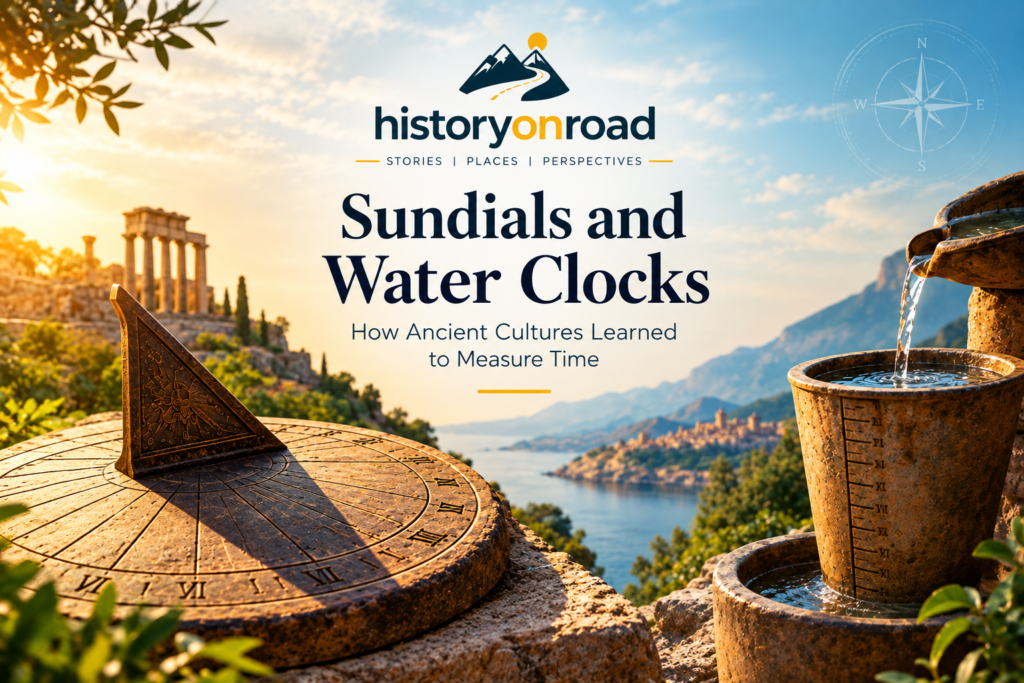

What Watching Shadows and Dripping Water Can Teach a World That Never Stops Checking the Clock
Long before mechanical clocks, digital displays, or the constant, glowing timestamps carried in nearly everyone’s pocket today, ancient civilizations faced a fundamental challenge: how to measure something as intangible and continuous as the passage of time. Their solutions, the sundial and the water clock, were elegant, observational, and deeply tied to the natural world around them. Understanding how these ancient timekeeping tools worked, and why they were designed the way they were, offers a surprisingly rich lens through which to examine a distinctly modern problem: our increasingly strained and anxious relationship with time itself.
The Sundial: Time Written in Shadow
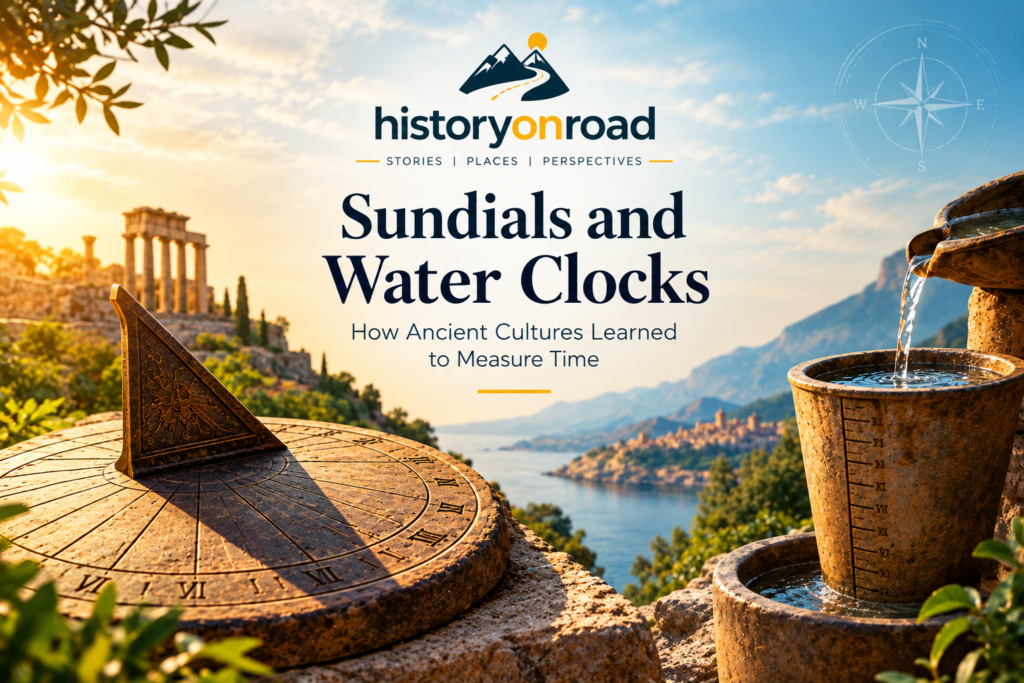
The sundial stands among the oldest known instruments for measuring time, with evidence of its use stretching back to ancient Egypt, Babylon, China, and Greece, in some cases dating back well over three thousand years. Its basic principle is elegantly simple. A raised object, often a triangular blade called a gnomon, casts a shadow that moves predictably across a marked surface as the sun travels across the sky throughout the day. By marking the position of that shadow at different points, ancient users could divide the day into measurable segments, effectively creating one of humanity’s earliest reliable timekeeping systems.
Sundials required no moving mechanical parts, no external power source, and no ongoing maintenance beyond occasional recalibration. Their accuracy depended directly on the visible movement of the sun, meaning they connected the measurement of time inseparably to the natural rhythm of daylight itself. A sundial could not function at night, nor could it operate reliably on a heavily overcast day — a limitation that, rather than being a mere inconvenience, reflected a broader ancient understanding of time as something naturally cyclical, tied to daylight, seasons, and the visible movement of the heavens, rather than something abstract, constant, and endlessly available regardless of natural conditions.
The Water Clock: Measuring Time Without the Sun
To address the sundial’s dependence on daylight, ancient cultures also developed an alternative solution: the water clock, known in ancient Greece as the clepsydra, meaning “water thief.” This device relied on the steady, measurable flow of water from one container to another, typically through a small, carefully sized opening, to track the passage of time regardless of whether the sun was visible.
Water clocks appeared in various forms across ancient Egypt, Babylon, Greece, Rome, China, and Persia, each culture developing its own refinements. Some designs used a container that slowly filled with water, marked with measurement lines along its interior. Others used a container that slowly emptied, with the falling water level indicating elapsed time. More sophisticated versions, developed later in Greek and Islamic engineering traditions, incorporated floats, gears, and even mechanisms capable of striking bells or moving small figures at specific time intervals — genuinely impressive engineering achievements for their era.
Water clocks held a particularly important role in settings where consistent timekeeping mattered regardless of daylight conditions, including courtrooms, where speakers were sometimes allotted a fixed amount of water flow time to make their arguments, and religious or ceremonial contexts requiring precise timing independent of the sun’s position.
Time as a Shared, Natural Resource
What stands out most clearly when studying these ancient timekeeping methods is how deeply connected they were to observable, natural processes — sunlight and shadow, or the steady, physical flow of water. Time, in this ancient framework, was not an abstract number displayed on a glowing screen, detached entirely from the physical world. It was something directly observed, tracked through a visible, tangible natural process that everyone in a community could, in principle, see and understand for themselves.
This stands in sharp contrast to how most people experience time today. Modern timekeeping is precise to fractions of a second, constantly displayed, and almost entirely abstracted away from any natural, observable process. A digital clock does not require sunlight, weather, or any visible connection to the physical world to function. This precision and constant availability bring undeniable practical benefits, but they also come with a quieter cost: the loss of a natural, embodied relationship with the rhythm of a day.
Reading Time as a Skill, Not Just a Glance
Interpreting a sundial or a water clock accurately required a degree of active attentiveness that modern digital timekeeping has largely eliminated. Users needed to understand the relevant markings, account for seasonal variation in daylight hours, and, in the case of sundials, factor in their specific geographic location to interpret the shadow correctly. This was not an entirely passive activity. It required a working understanding of the tool itself and its relationship to the surrounding natural environment — a form of literacy in the rhythms of the sky and the seasons that most people today no longer need to develop or maintain.
There is a quiet loss embedded in this shift, even amid all the genuine convenience gained through modern timekeeping. A skill once held broadly across entire societies — reading time directly from the natural world — has become largely unnecessary, replaced by instant, effortless digital displays that require no real engagement or understanding to use correctly. Recognizing this trade-off does not mean modern timekeeping should be abandoned in favor of ancient methods. It simply means there may be genuine value in occasionally choosing to slow down and reconnect with the more observational, attentive relationship with time that ancient tools like the sundial and water clock once required of everyone who relied on them.
Why This Matters in 2026
In 2026, humanity’s relationship with time has arguably never been more strained. Constant notifications, always-available digital calendars, global remote work spanning multiple time zones, and the blurred boundaries between work hours and personal hours have created a widespread, well-documented sense of time scarcity and chronic urgency. Many people report feeling that there is simply never enough time, despite technology theoretically offering more efficient time management tools than any previous generation has ever had access to.
Ancient sundials and water clocks offer a useful, grounding contrast to this modern experience. They remind us that time was once measured in a way inherently tied to natural limits and natural rhythms — daylight hours, the changing seasons, the physical, unhurried flow of water through a container. There was no expectation of constant, uninterrupted productivity stretching endlessly into artificially lit evenings, because the tools themselves, quite literally, stopped functioning once the sun went down or the water ran out.
This ancient relationship with time offers a valuable and increasingly relevant framework for modern conversations around burnout, digital wellbeing, and the growing movement toward more intentional, boundaried relationships with work and technology. The sundial cannot be rushed. The water clock flows at its own steady, unhurried pace, regardless of how urgently its user might wish otherwise. There is a quiet, practical wisdom in tools that inherently resist the modern impulse toward constant acceleration and endless availability.
There is also a broader lesson here about the value of natural rhythms in maintaining genuine wellbeing. Growing bodies of research on sleep, circadian rhythms, and overall mental health increasingly point back toward the benefits of aligning daily life more closely with natural light and dark cycles, rather than working, consuming digital content, and remaining constantly reachable regardless of the hour or season. Ancient timekeeping tools, built entirely around these same natural cycles, offer a symbolic and practical reminder of a healthier, more sustainable relationship with time — one that many people in 2026 are actively working to reclaim, whether through digital detox practices, stricter boundaries around work hours, or a simple, renewed appreciation for daylight and rest.
Refinements Across Ancient Civilizations
Both the sundial and the water clock underwent significant refinement across different ancient civilizations, each culture adapting the basic concept to its own specific needs and technical capabilities. Ancient Egyptian sundials, among the earliest known examples, used simple shadow clocks capable of dividing daylight hours into measured segments, valuable for structuring both religious ceremonies and daily administrative activities within a highly organized society. Greek and later Roman astronomers developed increasingly sophisticated sundial designs, including versions calibrated for different latitudes and even portable versions small enough to travel with their owners, reflecting a growing understanding of the mathematical relationship between geographic location, seasonal variation, and the sun’s changing path across the sky throughout the year.
Water clocks saw similarly impressive refinement, particularly within the Islamic Golden Age, when engineers and scholars developed remarkably sophisticated mechanical water clocks incorporating complex gear systems, automated figures, and precise timekeeping mechanisms that represented some of the most advanced engineering achievements of the medieval world. Chinese water clock design similarly advanced considerably over centuries, with some elaborate versions incorporating mechanisms capable of striking bells or gongs at specific time intervals, effectively functioning as early forms of automated alarm systems — centuries before comparable mechanical alarm technology developed in other parts of the world.
This pattern of independent refinement across multiple, often disconnected civilizations demonstrates just how universal and fundamental the human need to measure time reliably has always been, regardless of geography, culture, or available technology.
A Different Kind of Time Management
There is also something worth learning from the sheer patience embedded in ancient timekeeping. Reading a sundial or a water clock required a kind of unhurried attentiveness, an active engagement with the passage of time rather than a passive glance at a number designed to demand instant, minimal-effort recognition. In an age of instant digital timestamps that require no real engagement or attention whatsoever, there may be genuine value in occasionally returning to a slower, more deliberate, more observational relationship with how we track and experience our days.
What Getting Time Wrong Once Cost
It is worth remembering that ancient timekeeping was never a purely academic pursuit. Getting time wrong carried genuine practical consequences: misaligned religious festivals, poorly coordinated agricultural planting and harvest schedules, unfair courtroom proceedings, or ships lost at sea due to inaccurate navigational calculations. This practical urgency drove continuous refinement of both sundials and water clocks across centuries, as communities that depended on accurate timekeeping had strong, immediate incentives to improve their tools whenever possible.
This history is a useful reminder that our current expectation of near-perfect, effortless timekeeping, available instantly on every phone and computer screen, represents the accumulated result of thousands of years of sustained human effort and refinement, not a default, guaranteed feature of daily life. Every precise second displayed on a modern digital clock rests on a very long chain of accumulated observation, mathematical insight, and careful craftsmanship, stretching back to the earliest sundials cast in the sand of ancient Egypt and the earliest water slowly dripping through a carved stone vessel in ancient Babylon.
The Historyonroad Perspective
At Historyonroad, the story of ancient timekeeping resonates with us because it speaks directly to one of the most universal modern struggles: our complicated, often anxious relationship with time itself. It would be easy to view the sundial and the water clock as simple historical curiosities, replaced entirely by superior modern technology and no longer relevant to daily life. We see it differently. These ancient tools carry a quiet, grounding wisdom about natural rhythm, patience, and the healthy limits of a single day — lessons that feel more urgent, not less, in a world of constant notifications and round-the-clock digital demand. Sometimes the clearest guidance for managing modern time comes not from a new app or productivity system, but from remembering how humanity first learned to watch the sun and the water, and to trust the rhythm they revealed.