

Why Watching Sand Fall Still Teaches Us Something Modern Timers Cannot
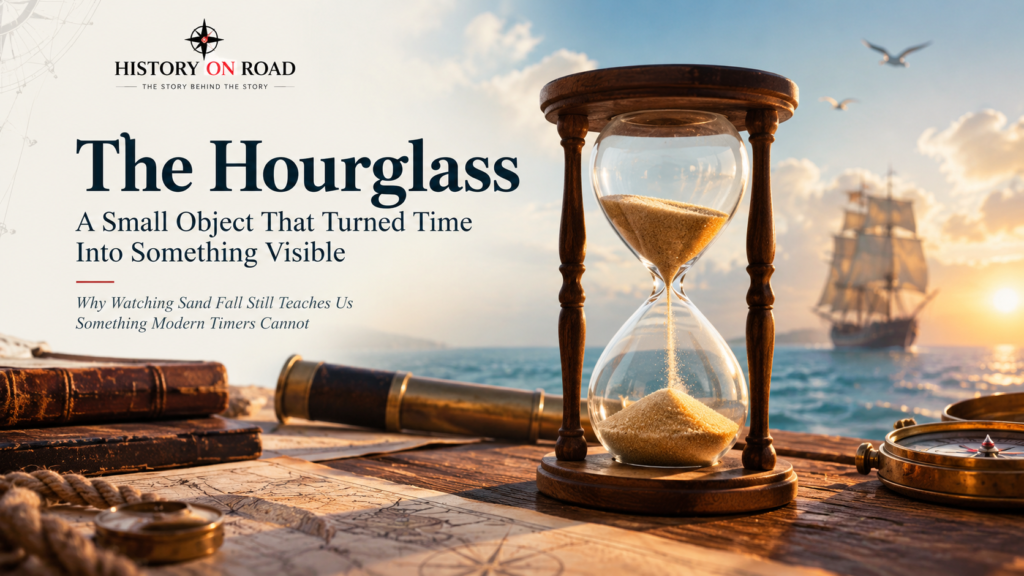
Few objects capture the passage of time as visually and emotionally as the hourglass. A simple, elegant device consisting of two glass bulbs connected by a narrow neck, with fine sand steadily trickling from the upper chamber into the lower one, the hourglass has served for centuries as both a practical timekeeping tool and a powerful symbol, appearing in art, literature, and even modern logos and design as an enduring visual shorthand for the passage of time itself. Understanding the history and function of the hourglass, and why its particular way of measuring time differs so meaningfully from modern digital timers, reveals surprising relevance for a world in 2026 that often struggles with attention, patience, and a healthy relationship with limited time.
A Simple Design With Real Precision
While the exact origins of the hourglass remain somewhat uncertain, with some evidence suggesting earlier use in the ancient world, the device became widely documented and commonly used in Europe beginning around the fourteenth century, particularly valuable aboard ships, where the rolling motion of ocean travel made water clocks considerably less reliable. Unlike a water clock, an hourglass depends on the steady, consistent flow of dry sand through a narrow opening, a mechanism far less affected by motion, temperature changes, or humidity, making it particularly well suited to maritime navigation, where accurate, dependable timekeeping was often a matter of genuine survival.
Sailors used hourglasses to measure fixed intervals of time critical for navigation calculations, ship’s watches, and coordinating activities aboard vessels where consistent timekeeping needed to remain reliable regardless of weather conditions or the ship’s movement. Beyond maritime use, hourglasses found their way into churches, marking the length of sermons, into universities, timing academic lectures and examinations, and into countless households and workplaces, valued for their simplicity, reliability, and the fact that they required no external power source of any kind to function.
Time You Can Actually Watch
What distinguishes the hourglass most meaningfully from nearly every modern timekeeping device is its inherent visibility. A digital timer or clock displays time as an abstract number, updating instantly and requiring no real engagement or observation to understand. An hourglass, by contrast, makes the passage of time a genuinely visible, almost meditative physical process. The sand does not jump from one value to the next. It flows continuously, grain by grain, offering a direct, visual representation of time actually passing, rather than simply being counted and displayed.
This visible, gradual quality gives the hourglass a distinctly different psychological character compared to modern timing devices. Watching sand slowly accumulate in the lower chamber creates a tangible, embodied sense of time’s passage that a blinking digital display simply cannot replicate. There is a reason the hourglass became such an enduring symbol in art and literature representing mortality, urgency, and the fleeting nature of time itself. Its physical, visible design carries genuine emotional and symbolic weight that abstract, purely numerical timekeeping methods tend to lack.
Fixed Limits and Honest Boundaries
Another important characteristic of the hourglass is its built-in, unchangeable limit. Once turned, it will run for a fixed, predetermined amount of time, and then, without exception, it will run out. There is no pausing, no extending, no negotiating with an hourglass mid-cycle. This absolute, non-negotiable boundary gave the hourglass a particular value in situations requiring fairness and clear limits, such as timing a public speaker to ensure equal opportunity among multiple participants, or setting a clear, mutually understood boundary for an academic examination.
This unyielding quality reflects something valuable about the nature of genuine limits more broadly. A boundary that can be endlessly extended or renegotiated often fails to create the discipline or focus that a truly fixed limit naturally encourages. The hourglass, in its small and simple way, embodies the practical value of clear, honest, unmovable boundaries, a lesson with real relevance well beyond its original historical uses.
The Hourglass Aboard Ships and in Daily Trade
Beyond its use in churches, universities, and courtrooms, the hourglass held particularly significant practical value in maritime trade and exploration, an application worth appreciating for how directly it shaped the wider expansion of global commerce and exploration during the age of sail. Ship crews relied on hourglasses to measure fixed intervals used in calculating a vessel’s speed and estimated position, a method known as dead reckoning, which combined known speed, heading, and elapsed time to estimate a ship’s location in the absence of more precise modern navigational tools.
Sailors would typically use smaller hourglasses, often measuring intervals as short as thirty seconds, in combination with a length of knotted rope let out behind the ship, counting the number of knots that passed through a sailor’s hands within the measured time interval to estimate the vessel’s speed, a practice that is, notably, the direct origin of the modern nautical term knot still used today to measure a ship’s speed. This practical application illustrates how directly the hourglass’s simple, reliable design supported the broader expansion of global maritime trade and exploration, an early yet clearly essential contribution to the same interconnected world of global exchange that ancient trade networks like the Silk Road had already begun building over land centuries earlier.
Why the Hourglass Matters in 2026
In 2026, attention itself has become one of the most fiercely contested resources in daily life, actively targeted and monetized by countless digital platforms, applications, and services specifically engineered to capture and hold user focus for as long as possible. Unlike the hourglass, which offers a fixed, honest, visible limit, much of the modern digital environment is deliberately designed to feel endless, with infinite scrolling feeds, auto-playing content, and notification systems built specifically to avoid ever presenting a clear, natural stopping point.
Against this backdrop, the hourglass offers a valuable symbolic and practical model worth genuinely revisiting. Its visible, gradual flow, and its firm, honest limit, stand in direct contrast to the deliberately limitless, attention-consuming design of much modern technology. Growing interest in digital wellbeing tools, screen-time limits, and mindfulness practices often circles back, whether explicitly or not, toward recreating exactly the kind of visible, honest boundary that the hourglass has quietly modeled for centuries.
There is also a valuable lesson here about the psychological benefits of visible, gradual progress more broadly. Modern productivity research increasingly supports the idea that visualizing time passing, whether through a physical timer, a visible countdown, or structured, time-boxed work intervals, can genuinely improve focus, reduce procrastination, and lower anxiety around time management, compared to working against an abstract, unseen deadline. Techniques like the widely used Pomodoro method, which structures focused work into clearly visible, fixed intervals followed by deliberate breaks, echo the same underlying principle the hourglass has embodied for centuries: that seeing time pass, rather than merely knowing it is passing, meaningfully changes how people experience and manage it.
Additionally, the hourglass carries continued symbolic relevance in ongoing conversations, in 2026, about mortality, urgency, and living with intention. In a world often characterized by distraction and constant, low-level busyness, the visible, finite, unhurried flow of sand through a narrow neck offers a quiet, grounding reminder that time, while limited, deserves to be noticed and genuinely experienced, rather than simply consumed passively in the background of an increasingly distracted daily life.
From Practical Tool to Cultural Symbol
Beyond its practical timekeeping applications, the hourglass gradually took on significant symbolic meaning across art, literature, and popular culture, particularly throughout the medieval and early modern periods in Europe. It became a common visual element in paintings and sculptures dealing with themes of mortality, often appearing alongside skulls and other symbols in a genre of art known as memento mori, works deliberately designed to remind viewers of life’s impermanence and the inevitability of death.
This symbolic association was not intended to be morbid for its own sake, but rather to encourage a thoughtful, intentional approach to living, a reminder that time is limited and should therefore be used meaningfully rather than wasted carelessly. The hourglass appeared frequently in the personal studies and workspaces of scholars and merchants throughout Europe, serving simultaneously as a practical timing tool and a constant, visible philosophical reminder of time’s steady, irreversible passage.
This dual identity, functional tool and philosophical symbol, has persisted into the present day, where the hourglass shape continues to appear widely in modern design, from loading icons on computer screens to logos representing patience, urgency, or the passage of time, demonstrating just how deeply and universally this simple ancient object’s visual language has embedded itself into how humans continue to represent and think about time, even in an era of exclusively digital timekeeping.
A Reminder Built Into Its Own Design
There is something worth appreciating in the fact that an hourglass cannot lie to its user, cannot be paused indefinitely, and cannot pretend that more time remains than actually does. Its honesty is built directly into its physical design. In a world increasingly filled with systems explicitly engineered to obscure, extend, or manipulate a person’s sense of time and attention, the simple, unmovable honesty of an hourglass feels less like an outdated tool and more like a quietly valuable model worth genuinely learning from again.
The Hourglass in Decision-Making and Games
Beyond its historical use for measuring fixed durations, the hourglass also found a lasting role in structuring fairness within games, debates, and decision-making processes, a role that persists in modern form today. Board games and competitive activities have long used hourglass-style timers to ensure each participant receives an equal, clearly bounded amount of time to act or respond, a principle that has carried directly into modern chess clocks, debate timers, and structured meeting formats designed to prevent any single participant from dominating shared, limited time.
This application highlights an often overlooked dimension of the hourglass’s enduring value: its usefulness not merely for personal time awareness, but as a tool for enforcing fairness within group settings where time itself functions as a genuinely shared, limited resource. Just as the qanat systems of ancient Persia required fair mechanisms for distributing scarce water among a community, structured, visible timing tools like the hourglass have long served a similar fairness function for the equally universal, equally limited resource of shared time, a role that remains just as relevant in modern boardrooms and classrooms as it once did in ancient courts and assemblies.
The Historyonroad Perspective
At Historyonroad, the hourglass captures something we deeply value in historical storytelling: the way a small, humble, unassuming object can carry genuine, practical wisdom relevant centuries after its original, everyday use has largely faded. It would be easy to dismiss the hourglass as a simple, outdated tool, replaced entirely by more accurate and convenient modern alternatives. We see it differently. In a world of 2026 struggling openly with distraction, endless digital consumption, and a genuinely unhealthy relationship with time and attention, the humble hourglass offers a quiet, visible, honest model worth revisiting. Sometimes the clearest lessons about living well within our limits come not from new technology, but from watching, patiently, as the sand runs out.